Friday, 7 March 2008

48) Andalusia (SPAIN): go with the needy

The Board launches a campaign for itinerant promote oral health among children. A bus pass by every province 144 representations of a puppet show to raise awareness among children about the importance of going to the dentist regularly.
The Ministry of Health will launch an information campaign aimed at sensitizing children Andalusian about the importance of following proper oral care, besides encouraging regular visits to the dentist header. The Minister of Health, Maria Jesus Montero, presented this initiative, consisting of a puppet show with the objective of bringing these messages to the smaller format in an entertaining, direct and attractive.
The work will be represented in an articulated bus that will tour all provinces of Andalusia until mid-November, which will allow a total of 144 performances and attendance of more than 14,000 children. The vehicle has a stage for puppet and an area for the audience, with a capacity of one hundred minors. Each session lasts about 35 minutes and consists of 9 acts.
Among other things, the book provides basic advice on the care of teeth, different parts of the mouth and the importance of going to the dentist on a regular basis. It also reports on the oral delivery free for minors, offered by the Government of Andalusia through the figure of the dentist header and the heel of dental care. The book also promotes among small other civic values, such as the importance of sharing household chores, saving water or recycling of garbage.
Of the total 144 performances to be in Andalusia, 12 correspond to Almeria, Cadiz (20); Cordoba (16), Grenada (16); Huelva (12); Jaen (16), Malaga (28) and Seville (24 ).
FREE CARE - The Board of Andalusia launched in 2002 oral health care free for children between 6 and 15 years, a measure whose implementation is being done gradually to cover the approximately 800,000 children under the age . During the year 2006, all children born in Andalusia between 1994 and 2000 can benefit from this care, which means that, in total, 587,706 are children who have access to the annual review to avoid the appearance of decay. This includes advice on preventive health and nutrition, as well as the provision of basic dental care and urgent if required by the state of your mouth or teeth.
The professional responsible for the oral health of children is the dentist header, the parent or guardian may elect annually among professionals public health system or the private sphere contracted by the Ministry of Health.
Earlier this year, the Ministry of Health referred by mail to each child the stub Annual Dental Assistance (TADA), the document that allows the choice of dentist and, in the case of persons who are entering for the first time this right is accompanied by a directory of professionals. This information is also available at health centres in provincial branches of Health and on the website of the Ministry (www.juntadeandalucia.es / health). This site also includes general information on this benefit. You can also request information on the Centre for Information and Public Services' Health Responds' (902505060).
Every child can go to the dentist elected as many times as necessary, for this purpose, it is only necessary to present the Annual Dental Assistance stub at the first visit. The purpose of this provision is that during the years that lasts this program, the child acquires a culture of oral hygiene, take appropriate preventive habits and receive adequate health care.
REVIEW - The basic dental care is a comprehensive annual review of the status of the teeth and mouth of a child, which also receives information on hygiene standards for maintaining their oral health and the correct use of fluoride, in addition to feeding tips to prevent caries. This assistance also includes preventive sealing cracks and pits that are detected, treatment of all decay of the teeth definitive removal of the pieces where it is not possible conservation, dental cleanings and urgent attention in cases necessary.
There are also cases of malocclusion severe in patients undergoing cleft palate, cleft lip and skeletal malformations.
* * *
Oral Health in Spain. And in Portugal? I wonder when is in Portugal to oral health will go to be considered a public health problem.
Post dedicated to the Minister of Health CORREIA DE CAMPOS, the Lord Director General of Health FRANCISCO GEORGE and the Minister of Education MARIA DE LURDES RODRIGUES.
Gerofil

Tuesday, 4 March 2008

47) One in four children go to the dentist to six years

One in four children go to the dentist for the first time to six years and only 19% of schools promote activities of oral hygiene among students, according to a study released by the Portuguese Society of Dentistry Dental (SPEMD).
The study covered 5,500 children, the five to 12 years, around a hundred gardens-of-childhood and primary schools throughout the country. According to the study, 25% of children visit the dentist for the first time at age six, "where have all the teeth of milk is imminent and the first eruption of teeth definitive."
The SPEMD also concluded that only 19% of primary schools and gardens-to-child perform regularly initiatives related to oral hygiene, and only 15% of the total studied is to promote the habit daily brushing of the teeth of children. "In 49% of cases, the involvement of schools it is so sporadic, through programmes promoted by other entities," adds the SPEMD.
* * *
The Minister of Education and Minister of Health will be insensitive to these figures?
Gerofil

Thursday, 28 February 2008

46) Information and more information: the basis for success in education to health

Criciúma, Brazil - To maintain oral health to date not just clean the teeth daily. Therefore, the Secretary of Health of Criciúma holds the week of healthy smile. About 28 thousand students receive the application of fluoride gel, which protects the teeth for six months.
From 25 to 29 September, 55 professionals, among dentists and attendants of dentistry, travel round all schools municipal and state. The opening of the activity will take place tomorrow (25) at 9 am in the "neighborhood youth", with presentations of cultural workshops of the institution. The coordinator of the Office of Dentistry, Eva Regina Grings, highlights the week that includes students from pre to the 8 th grade of elementary school. "At the time of application will be developed a lecture on care with oral hygiene, diet and and techniques for cleaning of the teeth" states the dentist. Children will still be targeted which unit of health should seek if need dental care. "The purpose of the week of healthy smile is making the dental caries prevention. The fluoride protects the tooth enamel and leaves the most resistant to the bacteria that cause the disease, "says Eva. The reapplication of the material should be held every six months, in addition to the visit to the dentist. Students also receive a kit with a brush and toothpaste to take back home.
* * *
If not know how to do best, at least as it is made in Brazil; ignore the situation, by the authorities, is the worst that can happen to any child. It is here to repair the Portuguese authorities.
Gerofil

Wednesday, 27 February 2008

45) Did you know that caries is transmitted ?

The bacteria can pass the mouths of parents for the child. The main cause of loss of teeth is a lack of proper hygiene, prevention is the treatment cheaper, more efficient and more comprehensive - the use of the thong, cleaning the tongue and teeth are measures to cooperate for the maintenance of health.
A cidade
* * *
Now whether these prevention measures are already well taught and put into practice in all the gardens of childhood in the country, because no child born already taught.
Gerofil

Monday, 25 February 2008

44) 42% of children up to 7 years had caries

"Three in five Portuguese with pain of teeth do not go to the dentist and more than half of children between eight and 16 years already have the caries in permanent teeth, shows a study presented yesterday.
This study of the Portuguese Society of Dental Medicine and Dentistry (SPEMD) was released today in conjunction with the presentation of the 7th Month of Oral Health, an initiative that develops SPEMD in October, promoting s free dental screening throughout the country.
According to SPEMD, based on the screening of 11 thousand people during the initiative Oral Health Month 2005, 36 per cent of Portuguese adults have symptoms of pain or abscess, but only 40 percent of them sought treatment for dental problems. The SPEMD also shows that only 46 percent of participants had no problems in adult gums.
The study further points out that 42 percent of children up to seven years had caries in 55 percent of children between eight and 16 years had the dental caries in permanent teeth. "It's a very high number and shows that the pattern continues and it is worth concern ourselves with the teeth of milk," noted José Pedro Figueiredo, president of SPEMD, recalling that the idea ingrained that have no concern with the teeth of milk "is wrong."
The screening of SPEMD further points out that only 37 percent of children up to seven years has a teeth healthy. "That is, only one in three children in this age group has a reasonable oral health," stressed the chairman of the SPEMD. During the screening, 15 percent of the children indicated that in the previous three months had symptoms of infection, pain or sensitivity, and only 40 percent of children with pain or dental infections sought professional help.
"This means that 60 percent of these children in distress not sought treatment," concluded José Pedro Figueiredo, stressing that "the suffering with oral health is implicitly accepted by society, although the overwhelming majority of the diseases of the oral cavity are prevention easy. " "I think the idea was to use partnerships with private entities to provide dental treatments," defended the president of SPEMD, admitting that "the reality is that most of the Portuguese population has no economic capacity to bring to the dentist."
In 2005 dentists were observed by volunteers during the month of Oral Health, an initiative that promotes SPEMD together with Colgate, about 11,000 people from throughout the country, almost 50 percent of them aged between eight and 30 years old . In parallel, the Colgate held in May this year a study on the oral health of children Portuguese, concluding that one in four children go to the dentist for the first time for six years and only 19 percent of schools promote activities of oral hygiene among students . The study covered 5,500 children from five to 12 years about one hundred gardens-of-childhood and primary schools throughout the country.
According to the study, 24 percent of children never visited a dentist in the 81 percent because it did not consider that there was no need. Forty-five percent of the children only makes the first visit to a professional dental between five and six years, when it is already with the teeth of transition, and 36 percent of children sought a professional dental caries by problems, and pain or abscess. Thirty-nine percent of children go to the dentist less than once a year, 56 percent do not because it is not considered necessary and 28 percent because it is expensive.
The study concluded that 27 per cent of children begin to brush your teeth for two years, 47 percent of both the three and 13 percent after only three, when the recommended age is at around six months, when it starts to appear the teeth of milk. Nearly half of children (48 percent) use a brush longer than the three months recommended, 79 percent do not use or elixir or dental wire, and 57 percent brush your teeth twice a day, but one in three clean the teeth without the supervision of an adult.
The Oral Health Month, which the SPEMD held since seven years ago in October of this year with the participation of around two thousand dental find the whole country, which will make a voluntary basis dental screening free to the population, not including treatments or radiographs. According to the organizers, in addition to making dental screening accessible to people of more limited economic resources, the initiative aims to "sensitize people to the correct habits of Oral Hygiene and draw a general picture of the Oral Health in Portugal, from the results of the surveys made. "
For registration and information on the check-up free, is working the 'blue line' 808205206, between 09:00 and 23:00.
* * *
I hope this article is read by those responsible for school health of the country or, in latter case, by the very Minister of Education. With so many reforms in education, there is no way to get out, once and for all, a measure of time to finish with the problem of access for all children and young people to treatments of oral health. WANTED WILL BE MORE STUDIES TO MAKE UP THE lift THIS SITUATION?
Gerofil

Tuesday, 19 February 2008

43) Make beautiful smiles

In the office that occupies just 15 days, Sónia St. Joseph struggle every day to show that go to the dentist does not have to be seen as a punishment. Since very early that Sónia St. Joseph felt attracted by the area of health. Always imagined a job that it could help the next. Something that says get with dentistry.
Sónia St. Joseph, 24 years old, says is that "end the suffering, to help improve the quality of life of people" which gives him more pleasure in the profession who began exercising 15 days ago in a clinic in Vila Franca de Xira.
Since it is applied first to medicine, rapidly love for specialty dental, mainly by the "challenge plus" to win the confidence of the people. Because, as a young dentist, "people still have an old and outdated that dentistry is associated with pain."
Every day in the office Sónia St. Joseph tries to demystify the work of the dentist, fighting phobias resulting from bad experiences when the technology was not another ally of professionals. "The area has developed enormously. With the anesthesia today the patients no longer feel any pain, "guarantor.
Every the day the dentist medical divide in the achievement of things as simple the realization of in composite restorations. For those not understood, is the translation: extraction of teeth, removal of caries and placement of mass white and cleaning, respectively.
The extractions are the most pleasure gives Sónia. "For the adrenaline, because it requires more because it is irreversible, even if we achieve," he explains.
Despite only having entered the labour market for 15 days, Sónia St. Joseph account already with three years of specialization, most in the last clinic of the Faculty of Dental Medicine of the University of Porto. In its curriculum account yet with an internship of six months in a hospital in Hungary.
An "extremely enriching experience", both professional and personal. In Hungary contacted with another reality of the world of dentistry, not so much in terms of technology, but with regard to assistance to citizens.
The state aid financially in all that is connected to dentistry, contrary to what is happening in Portugal, go to the dentist is almost a luxury, as the public health service falls short of the needs of the population.
To facilitate contact with the patients, Sónia St. Joseph had to learn some Hungarian, and that "nothing was not easy." The young dentist to even the episode in which a patient that meeting a month ago also started to learn a few words in English. "I was very moved", refers.
Despite classes in Hungarian, there were some moments in the case to have effect "frustrated" that you can not speak. As in most complicated situations of the forum cancer at the mouth in which only had the look and gestures to convey some comfort and safety to patients.
Also in Portugal, compared with Hungary, says there is a long way still to go in terms of awareness of the population to the importance of oral health. " Sónia stresses that often people do not know that oral health affects other diseases, making it even more important the care of the mouth.
So I would leave some advice: always brush your teeth after the main meal, not use hard brushes and toothpaste prefer appropriate; using dental wire and bochechar often. Recommends still one to two trips to the dentist a year to improve the oral health of the Portuguese.
O Mirante online (Sara Cardoso)
* * * * * * * * * * * * * * * * * * *
The practice of medicine, oral health seen by a professional:
- What is happening in Hungary fully demonstrates that countries with similar levels of development or under the de Portugal may know and invest their resources in public health, allowing their citizens primary health care, for now, is what is says article - in Portugal, go to the dentist is almost a luxury, as the public health service falls short of the needs of the population;
- "In Portugal, compared with Hungary, says there is still a long way to go with regard to the awareness of the population to the importance of oral health. Sónia stresses that often people do not know that oral health affects other diseases, making it even more important the care with the mouth "- are very well aware that the ministries of Health and Education in Portugal; simply its deep red tape and lack strategies to combat the real issues which should tackle, in terms of health, push us to a country typical "every man for himself", in what is generally more to achieve each way to have access to private ($$$$$$ $ $ $ $…., therefore money to pay) to be really successful. Poor, who is born already poor because, in the area of health, discrimination by now, and many in certain situations, logo appears at birth.
Hence the need to give back very deep in the current situation in Portugal, namely at the level of oral health (we must also bring in the quality that is given to citizens of other countries).
WHY WE ARE TO A COUNTRY OF THE EUROPEAN UNION, AS IS HOW THE HUNGARY.
Gerofil

Monday, 11 February 2008

42) Book that discusses the microbiology in dentistry is launched by teachers at UNICAMP

Helping the microbiological diagnosis through observation and interpretation of images is the aim of new book launched by teachers José Francisco Höfling and Reginaldo Gonçalves, the area of microbiology and immunology at the Faculty of Dentistry of Piracicaba (FOP), the State University of Campinas ( Unicamp).
"I believe that this manual can contribute much to the knowledge of students," said Höfling. The work Manual of light optical microscopy in microbiology, fungal and bacterial morphology is dedicated to students from graduate, post-graduate and expertise. According to the authors, the guide can help microbiological researchers mainly in the sector of health in general, involving courses in biological sciences and medicine.
The book is available to interested in two manuals. The book, more than 200 pages, is dedicated to practical activities of the discipline of microbiology, especially for dentistry. The work also brings an attachment with proposals for alternative activities to be associated with optical microscopy.
More information: (19) 3412-5322. [Fapesp]
Universia Brasil

Wednesday, 6 February 2008

41) Germany, a real example

Report on the health of Germans by the Robert Koch Institute shows that decreases the consumption of alcohol and tobacco. Average life expectancy of Germans grew three years since 1990.
The report pointed to a number of curiosities, such as the fact that the teething child be one of the most sound at international level. Also the concentration of doctors, dentists and hospital beds is much higher than in the neighbouring countries.
* * *
It is seen that there is a direct relationship between the number of professionals in the area of oral health and oral health of the people.
Gerofil

Wednesday, 23 January 2008

40) A praise

Dentists give free support

About three dozen young people of the county of Santa Maria da Feira already benefited from the support of free dentistry, under the "Service Anchor", the project Rights & Challenges, and that part already finished the treatment, and now, 17 users are still undergoing treatment.
The list of waiting has about 30 youths and adults enrolled. To support the implementation of this free at the level of dental medicine, the project Rights & Challenges established protocols of cooperation with three Dental Practitioners (Andreia Guimarães Lino, of St. John of View, Luísa Fernandes, Lobão, and Anthony Vita / UlfiClínica, Fiães), which are proceeding to dental treatment in young people indicated by the institutions / projects of social intervention of the county. Through these protocols, the "Service Anchor" fund the necessary materials and dentists offer their services.
* * *
It is also my praise for the work of those three doctors dentists. It is a shame that there are now so few gestures of love and solidarity with the next in our society.
Gerofil

Monday, 21 January 2008

39) Health: Dental tired of working for heating

To hire dentists, insurers require that part of the treatments, such as consulting or the extraction of teeth, so to have discount or, simply, free, argues the Order.
The chairman of the Order of Dentists Orlando Gonçalves presented five cases in the Competition Authority, but ensures that there is more. The professionals ultimately accept the conditions because "there is a surplus of doctors dentists in Portugal" and there are no alternatives.
The question may seem irrelevant to the customer of the insurance, but just think, difficult, someone has the same performance whether or not paid for it, especially when has no option.
Any means spending and a dentist is better not imagine in what our can save. The business is only very good, says the president of the Order of Dentists, for the insurers.
"Insurers can a great deal, since the component of risk is assumed by insurers. People pay to insurers, convinced that the professional is paid properly and acts medical-dental practice and that this happens, and nothing happens with ignorance of the public, "says Orlando Gonçalves.
Remember that the Order of Dentists already been fined by imposing minimum prices for consultation.
* * *
Someone who would enlighten the public of what really happens? It seems that there is some confusion between dentists and doctors in dentistry. I look forward explanations of both parties and insurers.
Gerofil

Thursday, 17 January 2008

38) 25% of the children only go to the dentist to six years

One in four children go to the dentist for the first time for six years, only 19 percent of schools promote activities of oral hygiene among students and only 15 per cent is to promote the habit daily brushing of the teeth of children. These are the findings of a study of the Portuguese Society of stomatology Dentistry (SPEMD) which will be released this Tuesday.
The study covered 5,500 children from five to 12 years about one hundred gardens-of-childhood and primary schools throughout the country. During the disclosure of the study will be presented the 7th Month of Oral Health, an initiative that develops SPEMD in October, promoting free dental screening throughout the country.
The Oral Health Month, which the SPEMD held since seven years ago in October of this year with the participation of around two thousand dental find the whole country, which will make a voluntary basis dental screening free to the population, not including treatments or radiographs. To gain access to a query simply connect to the Line of Oral Health - 808205206.
According to the organizers, in addition to making dental screening accessible to people of more limited economic resources, the initiative aims to "sensitize people to the correct habits of Oral Hygiene and draw a general picture of the Oral Health in Portugal, from the results of the surveys made ".
According to SPEMD in 6 / editing the Oral Health Month, last year, about 1,900 cooperating find, which led to about 11 thousand dental screening.
* * *
A radiograph of the situation is made; lack Now the authorities assume their responsibility for this situation and take drastic measures now to end with the complete breakdown of oral health that exists nowadays in our country.
Gerofil

Friday, 11 January 2008

37) Vaccine against caries: Research unprecedented studies of bacteria causing the reduction of caries in babies

Is that the immune system of the baby is premature brazilian compared to those of other countries? That inquiry was motivated to one of the researchers of the Faculty of Dentistry of Piracicaba (FOP) of the State University of Campinas (UNICAMP) develop new research on Streptococcus mutans, the main bacterium cause of caries in babies up to one year of age.
The studies relate to the question of the proliferation of bacteria that causes cavities and include research on vaccine against dental caries. In the United States, highlights Ruchele Dias Nogueira, graduated in Microbiology and Immunology of FOP / Unicamp, which defends thesis on the subject in October, the greater propensity of such bacteria in the oral cavity appears only from the 19 months of age. To learn the factor of the propensity appear before that age in Brazil, the researchers followed for 18 months, 160 babies in the age group of five to 13 months, of 28 public kindergartens, Piracicaba. "The reason is that our babies consume more sugar in this age group and many mothers do the importance of oral hygiene in infants, which is a cultural problem," explains the cylinder.
The survey of the FOP / Unicamp showed that children with only one year of age, coming into contact with Streptococcus mutans, have antibodies to interfere in the colonization by the bacteria. The presence of specific antibodies in saliva, against GbpB - protein important for the colonization by Streptococcus - can reduce the chances of infection by the bacteria of the oral cavity.
The monitoring of babies made up every six months over a year and a half. "On the first visit, the 160, 20% had the bacteria in the mouth," notes Ruchele. The monitored 160 babies were divided into two groups for comparison, of children with and without the bacterium Streptococcus. Most who presented no detectable levels of bacteria was bearer of large quantities of antibodies specific for GpbB in saliva, while children infected by the bacterium early not had these specific antibodies.
"Although the percentage of babies with the bacteria has been low is worrying to know that they can have caries prematurely, which accelerates the loss of teeth," examines the cylinder. The study indicates good prospects for the development of vaccine against dental caries. With support of the Foundation de Amparo à Pesquisa do Estado de Sao Paulo (Fapesp), the Prefecture of Piracicaba and participation of graduated Alessandra Castro Alves, who studies the genetic characteristics of microorganisms isolated these children and their mechanisms of transmission, the search proved the action of the vaccine on animals.
With the induction animals in the production of antibodies against the protein GbpB, there was a reduction of colonization by the bacteria and control the development of caries. The thesis is guided by the teacher Renata Mattos de Oliveira and Graner was part of the results published in Infection and Immunity, international journal of microbiology and immunology. To be applied in humans, the vaccine depends on greater period of study.
According to the graduated Ruchele Dias Nogueira, the problem cultural unnecessary to consider the oral hygiene of the baby is visible in the behavior of mothers who do not clean the saliva of children after, for example, a bottle night. For the simple fact blow the food of the children, continues Ruchele, mothers can transmit the bacteria through droplets of saliva. "Children institutionalized (going children in nurseries or schools) have lowest level of presence of the bacteria because they are encouraged to make oral hygiene," emphasizes.
The cleaning of the gums of the baby, details the cylinder, it must be done with gauze soaked in water, moving delicate, always after the breastfeeding, bottles and food. In children with teeth, parents should make cleaning of the teeth and use the thong. "The first trip to the dentist can be from six months of life, for guidance. Afterwards, the children should go every six months," recommends the dentist.
ELIANA TEIXEIRA

Wednesday, 9 January 2008

36) We here by ... Almost nothing!

Curitiba, BRAZIL - Health receives donation of ministry: dental equipment were not a gift but a recognition to the work of Curitiba. The network formed by 94 dental clinics in the Prefecture of Curitiba received from the Ministry of Health on Thursday, 36 sets dentist.
The donation, aimed to units of the Family Health Program (PSF), was formalized through agreement signed between the national coordinator of the Program Sorridente Brazil, Gilberto Pucca, and the vice mayor and municipal secretary of Health, Luciano Ducci. "These facilities are not a gift to Curitiba, but reflect the recognition of the pioneering work that the whole team of the Municipal Health develops in the attention to oral health and that remains forefront," said Pucca.
This is the second time that Curitiba benefits of the partnership Brazil Sorridente-PSF. The first occurred in 2004, when 44 sets dental arrived. The donation will allow enlarge the structure of work and care of the 125 teams of oral health of the units that operate in the form of the PSF. Ducci thanked consideration and reminded that the emphasis on oral health by the municipal health service comes from the decade of 60. "We have a commitment to this historic area. Partnerships like this are important because they represent the opportunity to enhance a service that already has quality often top to that in most cities, "he said.
Among the highlights of the oral health of Curitiba is the index DMF-d, which represents the average of teeth definitive with caries, lost or restored. At 12 years of age, children curitibanas have, on average, 1.27 compromised by tooth caries - one of the lowest rates in Brazil. They contribute to this access to public dental clinics and especially the policy of preventive health taken to schools and education centres for children through repasse of information and guidance on cleaning of teeth.
In the first half of this year, the municipal health network held initial consultations odontologic 98 thousand, 900 thousand basic procedures and reached about 22 thousand people - especially children - with shares of public health accompanied by technicians, dental hygiene. Support the work program Caries Zero, which keeps a running bus characterized the city to take the message and the techniques of preventive dentistry program and Health Unit and Special Friend, which serves people with special needs.
Bem Paraná
* * *
I am impressed when I compare the policies of oral health followed in Brazil with those applied in Portugal. I want someone here that knowledge of equal projects in Portugal; presume that there is need to raise awareness among central and local powers to the issues of oral health.
Gerofil

Tuesday, 8 January 2008

35) Dental practitioners against insurance companies

The Order of Dentists (OMD) filed complaint to the Competition Authority against some health insurance benefits for medical care "or below cost, or free." For dentists, is concerned public health.
On release, the OMD says that between situations that are detected "consultations, emergency, x-ray, cleaning and extractions of teeth for free." According to the Order, the situations detected challenge the public health. "The existence of medical treatments where dentists are paid far below the minimum costs required for their implementation conditions, therefore, the adequate provision of oral health care," explains the Order of Dentists. The institution ensures defend "a functioning free and competitive market in health," but stresses "so intransigent preserve the interests of consumers and providers of health in the quality of services and goods that are available."
SIC Online
* * *
It is not know whether the provision of "consultation, emergency, x-ray, cleaning and extractions of teeth" is done free of charge to patients or to the insurers. I think there is lack of clarification.
Taking this request, I would also like someone explain how it is done the supervision of health care oral offered by insurers in Portugal.
Gerofil

Monday, 7 January 2008

34) Agreement between clinics and regional health administrations to the provision of oral health

Regarding the e-mail you sent in five September 2006, it informed me that the Directorate General does not have the information requested. Either way will be important to strengthen that one of the purposes of the National Program for Promotion of Oral Health in force is:
Particular attention, in the interests of fairness, the oral health of children and young people with special health needs, as well as the economically weak groups and socially excluded, who attend school in regular schools or institutions.
Should you require more information can consult the website: www.dgs.pt
Without another matter,
Division of School Health

Sunday, 6 January 2008

33) Group of researchers cede right of patent for a vaccine for dental caries

On the first day of the school year, students of the Institute of Medicine of Biomedical Sciences Abel Salazar (ICBAS) have been urged to invest more in research. Sousa Pereira, chairman of the Governing Board, began by praise the importance of the work done by a group of researchers from the institute in the discovery of a vaccine for dental caries and pointed the finger to students who have not taken the money deployed in the last year for the program Research.
This year, in spite of last year have not been spending the 20 thousand euros provided, the amount invested will be higher in the expectation of a rise of applications with quality forward. "A country is developed not by the number of scientific articles published, but for patent notes that," said, referring to negotiations with a pharmaceutical company for the transfer of patent law of the discoveries made in the context of the vaccine for dental caries. Sousa Pereira insisted economic impact that this work will allow and reiterated that "we must make a leap" in scientific research.
The officer acknowledged that students need to be motivated and listed the investments planned for the ICBAS this year. In addition to the simulator resuscitação that already exists, this year students can count on a simulator of labor and gynecological exam and with a center of cardio-respiratory simulation. In the pipeline is to give practical classes using simulated patients from a partnership with schools in theaters in the city of Porto. The university will thus the hypothesis of early contact with patients "encenados" to be subject to a long training so that there is a great approach to real situations.
The ceremony Sollari Allegro, chairman of the board of the Hospital General de Santo António, the students received the confirmation that the unit will receive the status of a university hospital. The doctor explained that lack appoint the director of teaching HGSA and was offered the name of Bernardo Amaral. Students spend the ICBAS still rely on partnerships with the Centre Hospitalier de Gaia and the IPO.
* * *
It is here the news and a sincere desire to its dissemination to third parties.
Gerofil

Friday, 4 January 2008

32) Without fear of smiling

Conference discusses international in Belo Horizonte techniques
and advances in orthodontics
* * *
Interview with Jose Mauricio Vieira de Barros
* * *
- What is the main problem in the mouth of children, adults and elderly? Are there differences?
- A large intake of sugars and lack of oral hygiene are the main causes of cavities in children and adolescents. In adults stand out problems in the alveolar bone around the teeth and gums in the example of periodontal disease. Lower intake of sugars and better oral hygiene condition also favor a reduction in caries.
The loss of teeth in childhood, in adolescence and young adulthood in the elderly reflect the difficulty of mastication and therefore the proper digestion of food. The evil occlusion, recognized by the poor position of the teeth and bones of the face, also has a huge impact within the populations, both in children and in young people and adults.
Demand for orthodontic treatment for adults has increased considerably, not only by the knowledge of the dental drive at any age, but also by the development of techniques that are conducive to handling such cases.
- Why do dental services, even the simplest, such as cleaning and exchange of filling, yet are so expensive and inaccessible to the poor?
- The dental treatment of the most needy should be the responsibility of the public sector. The figures collected by surgeons, dentists for dental treatment following a spreadsheet of cost that takes into account the level of professional training, location and overhead costs of the office, the auxiliary employees, the materials used, taxes etc. We know that these values may make the treatment less accessible, but we also have our expenses are taken into account. And every person can and should do his part, because the prevention and oral hygiene are fundamental to a healthy dentition.
- The dentist has spoken highly of excessive concern of patients with respect to the aesthetics of the teeth. Do you believe that there is an exacerbation of the cult of beauty?
- The mouth and teeth are really a business card. A person with healthy teeth and a beautiful smile and harmonic has its self-esteem higher. There are studies that compare the influence of a beautiful smile on people's lives and that showed that placement, as compared to people with severe dental changes. The aesthetics really influence on the decision to treat the teeth, especially in countries where the cult of beauty is more present. In some countries, especially in Europe and Asia, there is much concern about the aesthetics of the teeth. But this is also the ignorance of the possibilities for treatment and even lack of access to them. The aesthetic value of our teeth, but the main objective of concern with our smiles is the recovery of functional occlusion, or in obtaining dental ideals of the contacts necessary for a proper chewing, swallowing, speech and breathing.

Wednesday, 2 January 2008

31) Canary Islands (Spain)

7,311 SCHOOL CANARIOS HAVE PARTICIPATED IN THE PROGRAM 'CEPILLÍN CEPILLÁN' - is organized by the Directorate General of Public Health Service Canario of Health in collaboration with the General Directorate of Programs of the Ministry of Education, Culture and Sports.
A total of 7,311 schoolchildren canaries have participated in a program of School Health Education to improve oral health called 'Cepillín Cepillán', launched by the Directorate General of Public Health Service Canario of Health in collaboration with the General Directorate of Programs the Ministry of Education, Culture and Sports during the year 2005-2006.
In the year 2005-2006 have been involved 7,311 students in 99 schools: 32 on the island of Tenerife, 25 in Gran Canaria and 42 in Fuerteventura. It offered a total of 62 lectures to parents and 9 courses for teachers, as one of the priority objectives is to promote the active participation of the parties involved in the process salud: family, students and teachers. The goal of the program is to improve the oral health of the students who are studying early childhood education (3-6 years) to prevent the occurrence of disease as more frequent oral cavities, gingivitis and fluorosis, as well as accidents mouth and harmful habits.
To that end, it is essential to promote the purchase of food and hygiene habits healthy from the point of view oral, learning how to brush your teeth right way, and restrict the intake of sugars especially between meals. This program also seeks to correct habits harmful to the oral health of children, such as the consumption of snuff in his presence, the use of pacifiers, taking bottles of milk before bedtime, the daily consumption of sweets, low fruit and vegetable intake, frequent consumption of soft drinks, thumb sucking, or not go to the dental consultation.
WORK - The Program 'Cepillín Cepillán' consists of activities such as a survey of parents on health habits and food, educational materials to color, cut and paste, games, drama 'The Tooth Manuela' starring puppets, and songs and records weekly breakfast and hygiene habits at home, among others. It seeks to assess the evolution of attitudes and procedures from the point of view through dental school through self-assessment sheets, surveys, put together, etc.; assessment of the assistance of parents to the talks; valuation of assistance teachers in training courses for teachers; record of compliance objectives and activities by class and school Valuation of oral health habits of schoolchildren in a sample of parents of the schools involved in the program at the beginning and end of the program when students are in the first years of elementary education (and with three years of the program); assessment of the oral health of a sample of students from schools involved in the program when students are in the first years of elementary education (and with three years) and comparison with the oral health of schoolchildren in the same way that have not participated in the program, and the effects of program development will also serve to evaluate it.
Following the completion of the program in the cuso 2005-2006, it is noted that the objectives achieved, have been distinguish foods harmful to the teeth of those who are healthy; know you can take some sweet things, and know how it is being correct cleaning of the mouth. As for the proposed activities, the most performed were drawing or cutting and pasting healthy food for a feast child. Coloring healthy foods for the teeth. Coloring brushes that are used for dental hygiene and delete those that do not work.
Activities to do at home by parents and objectives related thereto are made less, so there is an urgent need for more families to participate. Moreover, the activity of daily intake register as the registration weekly breakfast require more time to evaluate teacher performance and families to complete, so in the edition of 2006 it was decided to eliminate them. Other activities that have been conducted recently, as some cutting and pasting, have been included in the new edition but recomendándolas only 3 º of Early Childhood Education (5 years old).
To assess the oral health habits of schoolchildren aged between 3 and 6 took a sample of 5 schools in the municipality of Santa Cruz de Tenerife. We used the questionnaire included in the booklet of educational activities presented 14 questions and called on parents attending the lectures on oral health council be completed before initiating the talk. The findings emerged that completed the survey 50 parents. The average attendance for college was 12. Of the total number of parents attending the largest number of those whose children were in the first course (3 years old). The proportion of assistance based on the actual number of parents with children in Early Childhood Education was 13 percent.
Most respondents replied that their children are cepillaban teeth, and the after dinner, the most frequent, with a 46 per ciento.Hay a large percentage of children who are planed alone without the help of a adult (45 percent), so that the family is not even aware that it is essential that an adult must physically help the child between 3 and 6 years to brushing and not just monitor it. Most parents affirmed that their children only took candy and soft drinks on specific occasions, but there is a 10 percent consuming sweets every day, a percentage that should be lowered to try to reduce one of the most important risk factors of dental caries.
Only 34 percent of parents say that their children take daily 2 or 3 pieces of fruit and 2 or 3 pieces of vegetables, which is essential for the overall health of the child / a. The 19 percent get milk or other drinks in a bottle to sleep. These figures should be trying to reduce them because of the implication of this habit in the production of cavities and dental malocclusions.
In contrast, the percentage of school age use this sucks, or they lick his finger to sleep habits that when too much on the prolonged time can also cause malocclusions, is very low (5 per cent and 2 per cent respectively). 20 percent admit that their children have difficulty breathing or by the nose, another factor that extends over time also can cause dental malocclusions. A 69 percent have never gone to the dental consultation. This reflects how the family generally does not give importance to the dentition of milk and hoped to bring the child to the dental when you run into a problem or when they start to leave the teeth definitive.
Most parents (95 percent) use toothpaste on the brush their children and much 60 percent placed in the brush the correct amount (0.5 cm paste), but there is still a 18 percent put 2 cm, which should be avoided to prevent stains of fluorosis excess paste at these ages. The contents of the conversations from parents can help change these harmful habits.
* * *
For a long work abroad. Now is the time to also do something for here. The authorities have to respond to the needs of the population.
Gerofil

Tuesday, 18 December 2007

30) Dentists treat children of the hill inside the schools

TOWN OF SIERRA, the Holy Spirit, BRAZIL - The teeth damaged still is a problem that affects many children under six years of age. They exchanged nor the teeth and already suffering from pain, bad breath, and at times must go through a extraction, not to endanger the teeth that still will be born.
The lack of information about appropriate care with oral hygiene of children and to the lack of access to products of personal hygiene are the main motivating this reality. Therefore, in the municipality of the hill, the dentists will in public schools for teaching children to do the treatment and guide the students.
The numbers frighten. In 2000, more than 80% of children of the city, in this age group had already cariogenic. After the dentists came to visit the school, this percentage dropped to 47%, according epidemiological survey conducted last year. Before starting treatment for cleaning and restoration, the students attended lectures on health and attend oral hygiene, learn to brush your teeth in an appropriate manner and still receive kits with pulp and brush the teeth and thong. Then, all the children are tested, and those with cariogenic, undergo special treatment, without the use of drills and without the need for anesthesia. They do not feel pain and are happy with the result.
The small Leandra Aguiar Pereira, in five years, has the treatment here Wednesday. It was with a broken tooth, but said he has already learned how to do from now on. "I can only take ice cream after lunch and then I have to brush the teeth. The treatment was successful because I only have five years and all my cousins have damaged teeth, but I can not be like them, "said Leandra. The dentist Flávia Teubner, who participates in the program, emphasized that children learn easily and also pass the information to their parents and siblings.
The dentist explained that the contribution of the family in the prevention of diseases of the teeth is vital. The oral hygiene should start as soon as the child is born, with the cleaning of the gums. Once the teeth grow, they must be cleaned after every meal. Flávia explained that the health of the tooth of milk will define the quality of the permanent teeth.
* * *
It is the registration and bring down quickly the problems of the teeth in children. Prevention and education are the key weapons for the prevention of diseases. There is sense of the political and to implement policies for prevention from the first years of schooling of children. The Portuguese children so expect; missing know until when?
Gerofil

Monday, 17 December 2007

29) Testimony young in the first person

(...)
I know that I was told by a family doctor, then (end of the seventies) to the query of "dentist" - the Health Center of Alandroal I remember that moved a "dentist" of Elvas. Generally there were twelve to fifteen people to be served in a morning, when the dentist came just go to form an orderly queue and play to take an injection (anesthesia) - I think the same syringe used to inject everyone. Shortly after starting the extractions…
I do not remember any other types of consultation there charged; only if there were - extractions (no cleaning or other treatments). At the end of two hours they were all "treaties" and although there would be the "dentist".
I would have my twelve to thirteen years, the treatments that made me such a dentist were solely to extract teeth-never done a radius X or any other type of oral treatment. If after ten minutes could not draw me a root or a tooth, the dentist "marked me a new query for eight or fifteen days later, so a root harder to extract took sometimes three or four "sessions", ie more than a month to be extracted. I do not know exactly why I tired of both go there and never have finished the treatment (consisting solely to do extractions); also never seen such that the "dentist" make or had any written record of the treatments that was - was all along, or they were children, adults or elderly.
(...)
Full text here

Sunday, 16 December 2007

28) City of the Feira: Dentists give free support to young

About three dozen young people of the county of Santa Maria da Feira already benefited from the support of free dental medicine under the "Service Anchor", the project Rights & Challenges, and that part is already over the treatment, and now, 17 users they are still in service, shows the Board of the Feira.
The list of waiting has some of 30 youths and adults enrolled. To support the implementation of this free at the level of dental medicine, the project Rights & Challenges established protocols of cooperation with three medical dentists who are making a dental treatment in young indicated by institutions / projects of social intervention of the county. Through these protocols, the "Service Anchor" provides the necessary materials and dentists offer their services.
Considering the magnitude of the problem of dental cariogenic of many children and young people at risk social and economic difficulties in their families minimize it, the Rights & Challenges calls to other doctors dentists of the county to join this project, contributing thus, for the physical well-being and self-esteem of many children and young people of the county.
The "Service Anchor" intended as a response to social emergency for the families of the county of Santa Maria da Feira showing persistent poverty, enabling an immediate response to situations of high risk, which forms the support level of dental medicine. This service will also with a resource center for Health, with articles for the rehabilitation and continuing care, which are assigned as a loan to needy families, and the institutions that carry out work in this area.
* * *
An example of what must be done to the municipal level. This is also my contribution to the dissemination of this initiative.
Gerofil

Wednesday, 12 December 2007

27) Gomera / Canary Islands

Health performs works of improvement and adaptation in the unit for 25,000 euros Dentistry - The Ministry of Health of the Canary Islands government, through the Health Services Management Area Health of La Gomera, has made improvement and adaptation works in the current Unit Dentistry, enabling thereby expand the capacity of intervention this specialty, both in the dental and nursing with a consequent benefit to the citizens of the island.
The unit, located in the old Health Center of San Sebastian, has been with this initiative, the possibility of improving clinical equipment such as new equipment dental extraction adding pieces to existing, new equipment sterilization, carriage of cardiac arrest , among others.
It also creates a new space for administrative development and management fully computerized that allows access to computerized analytical and from the Service Laboratory Hospital Our Lady of Guadeloupe.
From the Health Services Management, believes that since the Unit, which serves approximately over 1,741 adults each year, go with it, improved and guaranteed care, allowing health professionals to work with greater safety and quality.
On the other hand, and from the Management warranted improvements and adaptations, are also supported by the importance of Oral Health Program that takes place in schools. The intervention through this program, affects about 677 children each school year, that program because of its importance and deployment on the island, has enabled significant changes thanks to the preventive treatment to address problems in caries, as well as treatments made in gums.
Another aspect that is served after the improvements, is the promotion of oral health education through various lectures and symposia organized by professionals such unit in schools on the island, whose goal is to get themselves acquiring school hygiene habits and a healthy diet continue to cooperate in maintaining the health of the same.
To that end, the Management, has valued the importance of the unit can also provide new units of the existing training in the same center, with the technical elements and pedagogical enabling or facilitating the work of professionals.
* * *
It is not exactly the geographical origin of the most important news of this post, what matters Rather, they see how it is out there for the authorities see the need for oral health as a priority investment, trying to ensure that service to the entire population.
For now, we are still far from satisfy the needs of the population. Until when? Are the authorities have not yet grasped the urgent need to respond to this public health problem? I hope that, somehow, with this Blog draw the attention of national public opinion that this problem needs urgent resolution in our country.
Gerofil

Tuesday, 11 December 2007

26) Smiling gives Health

City Council Cascais, in ordinary meeting of September 4, among other matters, ruled:
Give the Core of Estoril Portuguese Red Cross a fee of 5 thousand euros, to support the "Smiling gives Health". With the aim of promoting oral health, this program has, initially, perform screenings and then ensure dental treatment to children deprived of the neighborhoods of Novo do Pinhal, Galiza, Liberdade and Fim do Mundo.
This program covered last year 112 children and young people, aged 6 and the 14 years.

Thursday, 6 December 2007

25) ORAL HEALTH: More some practical examples developed in Brazil

Project will prevent treatment of the teeth in students (Crossroads South, Brazil) - The Secretary of Education crossroads of South launched the project smiling for the future, with the partnership of local schools for teaching basic and early childhood education, with the dentist Denis Ferraz da Silva and with the teacher José Ronaldo Kapczynski. They received training for the deployment of activity in the municipality. The Secretary of Education, Culture and Sport, Solismar Ribeiro Figueiró, explains that the work is a partnership of local government, through the portfolios of Education, Health and Social Service Trade (Sesc).
The project's goal is to develop, with students of the municipality, various actions of the character preventive oral health. They will be met children enrolled in the level B of early childhood education and 1 st to 4 th years of fundamental education.
The intent of the work is to prevent damaged teeth and gingival diseases through education and awareness of the child for self with health and, by consequence, to stimulate self-esteem, teaching a technique for cleaning and use of the thong. The activity will also challenge the skills manual for health through daily practice, providing topical application of fluoride and adopting appropriate diet.
In this line of work, the other novelty of the project smiling for the future is the use of a special technique that aims to answer the larger number of students, using minimal resources and does not need the use of dental office, but only some of the training and equipment . The mayor Artigas Teixeira da Silveira stressed that the work is one of several tools of public health outlined by the current administration.
* * *
Pilot Project of Preven-so is deployed in units of primary education in Cubatão, Brazil-Reduce the incidence of teeth damaged and reach the indexes set by the World Health Organization (WHO) as ideal for 2010. This is the objective of the Program on Education and Prevention in Health, Oral-Preven-so, established several years ago by the Municipal Bureau of Health in kindergartens and schools of early childhood education in the city. Now, the program will also meet other age group, is extending to the students of basic education.
The pilot project was initially implemented in Emef Father Antonio Olivieri, in the Garden Casqueiro, benefiting more than 600 students. In the afternoon of last Monday (28/08), plus a school-Emef Usina Henry Borden has been benefited. There, about 390 students won oral hygiene kit and went to have supervised cleaning of teeth. According to those responsible for the program, the soon-as Preven also will be deployed in Emef Luiz Gustavo de Lima, in Vila Christmas, thus covering more than 1,400 students.
The implementation of the project is made by the Technical Group, Oral Health in partnership with the Municipal Bureau of Education. The Preven-so allows the resumption of the habit of cleaning the teeth that many students lose to join the primary school. Survey done by technicians proved that, by not having the intimate relationship between teachers and students as it is in kindergartens and in teaching children, the routine dde clean the teeth is lost. Another factor that contributes to this is the continuing awakening of the sense of shame in children, as their age developments.
The program also counts with the participation of voluntary associations of parents and teachers (APMs) and monitors the class. Students receive an oral hygiene kit containing a dental school child of soft bristles, a tube of cream and a roll of dental thong. The kit is kept in the school itself for the exclusive use of the student and must be used every day after lunch. The evaluation of the program is done every three months, when the technical team going in the units to investigate the results obtained using the technique of highlighting of bacterial plaque.
Depending on the results, as Preven-will be extended to all schools of basic education of the municipality, which will allow even greater reduction of the indices for the epidemiological diseases bucais more common.
* * *
Anyone who has followed this blog will already have been realized as local authorities and central Portugal and Brazil assume postures differentiated on the oral health of the population, in this case it seems that we, Portuguese, we still have much to understand with the work currently in Brazil.
I hope that these posts serve as a warning so that we create also in Portugal policies that allow that any Portuguese citizen can enjoy time of oral health services, regardless of their social condition.
Gerofil

Tuesday, 4 December 2007

24) Point of View

For almost all the people there are essentially three times in the year when you think of the past and the future prospect is, outlining from then onwards, new objectives and targets. One is the changing seasons of the year, another is on our anniversary (may be simultaneous with one of the other) and the last case at the time of holidays.
We are therefore at the time of trying to fix past mistakes and seek to improve several points that we consider essential to our well-being and the people around us. For example, this may be the ideal time to decide to stop smoking. Increasingly people have managed to abandon a habit that proves it causes serious health problems, so all times are optimal for making this decision.
Another issue that has major impact on general health, both in mental and physical is the increase in weight. However, there is no better time to try to lose some quilitos than this. So why is the season for beach and like to be with good point. The increase in weight and obesity issues are increasingly present.
In recent years we have seen a substantial increase in people fat or obese, a situation resulting from our development, with a consequent increase in the purchasing power and access to goods and facilities that predispõem that this occurs. That is, on one hand we have access to all the food they like, on the other hand, hardly have to make any effort to "burn" some of the calories you eat, because the vast majority of the population has his own car, command of television, lift , ...
The issue of obesity is not only the aspect of the person who is at issue, but also, most importantly, their health. Everyone knows the risks and repercussions several that excess weight poses to the general health of people, an issue that obliges us to think seriously in the care we should have with the food. It is important to know what you should eat, and how to eat. So this is the ideal time to rethink their eating habits. For that you have to try to match its power to exercise that performs daily. Most of the time this will only be possible with the help of specialized technical personnel (doctor, nutritionist) and, with great determination and good sense itself. But it is essential that the strength of will, because the demands and temptations are permanent. Since the parties, the shopping and advertising are enough to discourage all. Incidentally I still have the opinion that the company now has to defend itself of the imbalances that will create.
In the case of food, knowing the negative influence that the "fast-food" has been taking on the health of the people, is beginning to be time to legislate on the subject, hindering its advertising and requiring the payment of additional fees for those who sell these products. Just as is the case with alcohol and tobacco. The cost for the health of the intake of such foods begin to be extremely high, and someone will have to put a brake on this problem.
There is an entire educational task to develop in order to enlighten the people (parents, children, uncles and grandparents) on the power best suited to take. For example, ever notice most parents (grandparents, uncles), as soon as the morning coffee, buy a package of chips and a juice for young children. As you know, it is not only the problem of obesity, but also the greatest risk for other problems appear as cárie dentistry. More nonsense could not do.
Often think that the proper diet does not involve the things that we know better, which is not true. Since it has sufficient knowledge, it is possible to combine a balanced diet. It is more or less what I said about how they should eat the candy to decrease the risk of coming to developing teeth damaged. In this case, it is known that the ingestion of a sweet at the end of the meal is much less harmful than between meals.
So it is not so difficult to trace and try to meet objectives, it is only seeking information is the best way to do it.
MELO PAULO, Medical Dental, Doctor of the Faculty of Dental Medicine of the UP, Member of the board of the Order of Medical Doctors

Tuesday, 27 November 2007

23) Babies can be served free

Araçatuba, Brazil - The mothers of babies under one year of age can register their children for free preventive care and educational Baby Clinic conducted by the FOA / Unesp (Faculty of Dentistry of Araçatuba / Universidade Estadual Paulista).
Children need to have up to one year to join the service, which extends up to three years. All the educational work of prevention and healing is done by students of the graduate and post-graduate and professional training that are in place, under the guidance of teachers in the area of pediatric dentistry.
The first activity is to a lecture targeted to parents. On each day are served 50 babies. Consultations occur every two months and, on average, the baby passes through the service six times a year. Mothers receive guidelines for diet and oral hygiene. The teacher Frederick Robson Cunha explains that the three and a half years the babies receive high and are referred to the clinic for the prevention, which are served free until the eight.
All this work pediatric search invest in oral health since childhood, since the activities to prioritize prevention to ensure that the child is a healthy adult.
* * *
I hope this example "get" here in Portugal.
Gerofil

Friday, 23 November 2007

22) Hospital of Saint Spirit of Angra do Heroísmo (Azores)

doctors stomatology clarify the population
* * *
Duly authorized by the Board of the Hospital of Angra and with knowledge of other doctors of stomatology of autonomic region of the Azores are the undersigned signed provide the following clarification to the population following an interview given by Mr. Chairman of the Order of Doctors Dentists (OMD) to a newspaper of Angra do Heroísmo and the various stories that his official visits and hearings provided then.
There are serious and false accusations made to the Department of Stomatology (SE) of the Hospital of Saint Spirit of Angra do Heroísmo. Just to cite a few, it says be limited, read - is restricted, the attention to certain groups, including the elderly, not the urgency of the specialty duly fulfilled; auferirmos ordered millionaires, ... Communicate is also incorrect information.
We, as briefly as possible, and clarify some other and make some hope. This is wrong:
1. What is "limitation of care at the Hospital of Angra…" actually the SE of the hospital in Angra besides not limit access to your query is still a lack of supply of dentists Health Centers (CS) of the Beach and Angra , running in consultation foreign beyond the work itself, some of what should be done in those CS plus the entire emergency dental and medical and surgical pathology of oral maxillary facial area.
2. "The amount of 432000 euros to annual payment of service to doctors for prevention of stomatology (ME) of the autonomic region of the Azores" actually is very well, perhaps deliberately, in the real value. It is the "discomfort" of the authorities when confronted with such imprecision.
3. What is found "… the uncertainty of care in the Emergency Service (SU) of HSEAH…" actually any citizen who go to the hospital SU is observed by the medical service to understand that contact and ask whether or not the presence of the specialist, that is the call and in the prevention regime, is following strict criteria of urgency.
Doubts are:
1. What the dentists can "… to four times more with the same resources…" nor indeed to the tasks they are currently conferred (with priority attention to children up to fifteen years of the two counties of the island) to fully meet that will… the emergency dental and maxillo facial trauma for which they have no jurisdiction…
2. What were "pioneers of dental medicine in the Azores…" indeed even before his group had any medical professional dentists in the archipelago to make dentistry, art dental or dental medicine, but now is called, in addition to other medical condition the oral and surgical equipment. It was the Department of Stomatology of Angra the first to open up the schools complementary part in the region. Will want to be "pioneers" at the national level of its triumphal entry in hospitals through the epicenter of the Third doing in the Azores prior trials ?
3. "What… a doctor-dentist (MD) is a doctor as any other…" actually do a degree in that the first three years have chairs basic common with the course of medicine but then derived for the area dental chairs not making the fundamental the medicine going from first years, the diseases and their treatments. There are also internships general hospital nor of expertise. They are not licensed in medicine but in the call-Dental Medicine, which, for example in Spain, has its equivalent in Dentistry and the American Dental gives the title. The doctors of stomatology make the six-year degree in medicine, followed probationary hospital, often clinical general, the specialty home, evidence of rising public career, and so on., And naturally entered the Order of Doctors as Dermatologists or Cardiologists. The Dentists, like other health professionals, such as Pharmacists, Nurses, etc. Have their own professional Order.
It is surprising:
1. The following sentence uttered by Mr. Chairman of OMD - "that each doctor of stomatology that skirt and she retires, will be replaced by a dentist." What I intend to propose to the authority is inconsistent with the whole speech that perpassa the interview in question and by all the others that we recently have been provided to the representative of OMD in the Azores. The average age of doctors of stomatology in the region walk by forty-five years. According to the law is expected to become the service between ten and fifteen years. It will be realistic and consequent such a proposal, or expect that we end the career advance ?
2. What Mr. Chairman ache "extremely negative the existence simultaneously not peaceful between the two professional groups" It is public and well known that the attacks to doctors of stomatology from dentists, particularly in the County of Angra, have been repeated cyclically to shiver of good rules of ethics and ethics, often using the controversy on this issue as a weapon of political pitch whose purposes are clear. Again, now the voice of his most representative, rather than embrace the path of dialogue and collaboration, which we have always been open and whose usefulness, especially for patients, it is unquestionable, come to a new attack on a sector that it is part of the Regional Health Service.
It is hoped:
- From the tutelage a clarification to the public about the functioning of the Medical Dental Centers in Health and Services of Stomatology, particularly that of Angra, who is unjustly accused, as well as their professional, in breach of his duty.
- The appointment by the Portuguese. Mr Secretary for Social Affairs of a Commission to study the issues involved in oral health in the Autonomous Region of the Azores.
- That this time the doctors of stomatology and maxillo facial surgeons can be heard, because they and the public and private sides will also, in addition to its systemic impact, the health of the mouth, teeth and jaw of the population of the Azores.
Bruno Walter Ferreira, José Manuel Rosa and Valentim Araújo

21) Technical integration of bone, 80% of attendances free

Bauru, S. Paulo (Brazil) - Opened for almost a year, but running since January, the Office Branemark, which Bauru become a world reference in the technical integration of bone, which allows recover parts of the body uniting bones and prostheses with the titanium screws, including teeth, have a challenge ahead: meet the around 4 thousand people are on the waiting list.
People who do not have any teeth and the victims of mutilations caused by accidents or diseases such as cancer and bad-training are priorities. The operations are done by volunteer doctors and dentists who are displaced from various parts of Brazil.
By law, 80% of attendances have to be free.

Friday, 16 November 2007

20) Hypothesis to leave the most beautiful smile

Santa Cruz do Sul, Brazil - One of the biggest moved the 6 th Imperafest was the bus with stomatology office of the prefecture, in which consultations were provided free to all who asked. It was an opportunity for the children learn the techniques of cleaning the teeth and the care that must have to stay healthy with a smile. Adults also not lost a chance to make a visit to the dentist.

* * *


Here is how the municipalities in Brazil invest in the health of its citizens. It is a shame that so many elected officials choose the Portuguese to Brazil as a tourist destination does not have a minimum of intelligence to copy here for the good examples that are made there.


Gerofil

19) Up to 7 years old

Did you know to be parents to brush your teeth and maintain the cleanliness of the language, in the case of children up to 7 years of age?
Gerofil

Thursday, 15 November 2007

18) Students visit to the post of Family Health

Student council
* * *
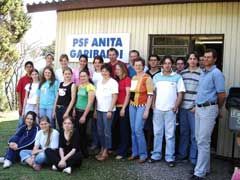
Students from the 8 th series of the School Municipal Willibaldo Michel, the High Spanish, inside of Valley of the Sun, made a visit to the post of Family Health (PSF) Anita Garibaldi, the High Trombudo, last week, to check the work that is developed in unity.
The activity is part of the shares of the project's Board of Council, called the Student Session. The young participants engaged in symbolic form, the work of the council and therefore are investigating some municipal services management.
Initially, the nurse Carla Simone de Oliveira Bopp said that the team is formed by a doctor, a nurse, technician, nurse, a dental assistant from office, a dentist and seven community health agents, who work from Monday to Friday. The nurse stressed that the team serves, currently, 497 families from the mountain region and the whole program is aimed at the prevention of disease, which goes far beyond healing practices. One of the goals is to inform the community charge and actions that seek to improve the quality of life of the family.
* * *
Of interest: instead of being the technicians of health to go to schools, young people are invited to go to units of health.
Gerofil

Wednesday, 14 November 2007

17) Teams make home visits

Lages (Santa Catarina, BRAZIL) - According to repassados by the Municipal Bureau of Health, Oral care, the program has gained prominence with the community. They are 18 teams entered in 33 teams of the Family Health Program (PSF). The workload is of 40 hours per week and the teams operate in neighborhoods Guaruja, Saint Helena, Tribute, San Pedro, Santa Catarina, Santa Monica, Petrópolis, Gethal, Penha and San Carlos.
According to the municipal secretary of Health, Heron Anderson de Souza, the teams develop activities of home visits and care for groups of pregnant, hypertensives and diabetics. "Inside the city we have office car that meets at various locations. It is a real laboratory of itinerant dentistry, "says Heron. The team's work, Oral PSF is a dentist and a dental assistant from office.
The teams meet on average 2,400 people a month. "The department's Ready Municipal Dental Care serves emergency cases and works in area attached to the Ready Relief Tito Bianchini. This is a service that gains prominence with the community" Heron stresses.
* * *
Initiatives that are also extremely lacking in Portugal. We hope to see.
Gerofil

Monday, 12 November 2007

16) Prostheses and appliances will be donated (Note: this is not in Portugal)

The Prefecture of Joao Pessoa will offer appliances and dental prostheses, free of charge, for the low-income population of the municipality. People with problems of occlusion in the dental arcade will be benefited with the placement of the apparatus, beyond monitoring of the entire treatment.
The Secretariat of Health of the Municipality will make a consultancy with the support of the oral health technicians from the Ministry of Health in order to define the age group that will have priority in attendance. According to the director of the Center for Dental Specialties (CEO), Danilson da Cruz, the idea is to prioritize the care for the most serious cases in children and pre-adolescents. The screening will be done via the Family Health Units.
The forecast is deploying the service until the end of this year. Danilson said John Person has a network of primary care in oral health composed by 180 teams, each made up of a dentist and one of Consultório Dental Assistant (ACD). For each unit of the Family Health Program (PSF), said there is a team of dentistry working eight hours a day, from Monday to Friday. The daily average are 16 attendances per team, according to the director of the CEO.
Among the procedures are included application of fluoride; periodontal treatment (gingiva); prophylaxis (cleaning); extraction and dental restorations. Since 95% of the procedures using resin (the color of the tooth).
The first competition of Smile School, promoted by SMS, will elect the five students with the best smiles of the 1 st to 4 th series of teaching basic public network. Among the requirements are to participate in workshops of the "Action Odonto-educational," be from the public, does not have carie and have good school performance. Registration is open until the 15th of September.
Jornal da Paraíba
* * *
There is not a single day that come to us examples in the implementation of policies for oral health, when we speak of Brazil. For now, it would be rather interesting to know what the politicians able to have equal gestures not interested by their countrymen.
Unfortunately, looking at the national picture, which does not lack there are unscrupulous politicians that the cost of taxes that we all pay, are dedicated to major festivals and tours by air free for people of the third age, but there are forgotten what the poorer both need: positive discrimination in the quality of access to health care (because it is so the strength of our current democracy, expressed in the votes during the elections).
Gerofil

Friday, 9 November 2007

15) Island of Madeira and Porto Santo: Dental Medicine with more consultations, of course

The number of consultations of dental medicine in the health center of Porto Santo, will increase in the next month of October, found the JM. When we mentioned, instead of the current three days, the port-santenses will be made available to dentists in the health unit, for four days a week (Mondays, Tuesdays, Thursdays and Fridays).
If to say that the residents in Porto Santo will have more reason to smile. It is recalled that since the Regional Oral Health Program has been implemented in the Region, in 1997, the problems related to carie dental, and especially the children, have been decreasing significantly in some counties. But, in Porto Santo, the situation has remained more or less equal, and that children aged six and the 9 years are those that have made the most damaged teeth.
Please note that the council of Porto Santo is the only one of the Region, which provides oral health and also dental medicine at the health center location.
Jornal da Madeira
* * *
Here is another example that takes too long to become normal in any Health Center on the mainland. For some reason it makes sense there autonomic regions ...
Gerofil

Wednesday, 7 November 2007

14) Search UnB cariogenic relates to the production of saliva

One of the factors directly associated with the increase of cariogenic is the low flow of saliva. This relationship has been proven in a study at the University of Brasilia (UnB) by Soraya Leal, teacher of the Department of Dentistry (ODT) of the institution.
"The world scientific literature is inconclusive about the relationship of saliva with the cariogenic," said Soraya the agency FAPESP. "By this account, we show that relationship in practice, by means of laboratory tests on 60 children," he says.
Of the 35 children who had no teeth damaged, all had salivary flow between normal and high. However, the other 25 that had damaged teeth had little saliva. The researchers have yet to review systematically through databases on the Internet, with articles on the subject published in international scientific journals. "Based on 70 scientific work we find that the probability of the individual submitting cárie is much greater when the production of saliva is less than 1 milliliter per minute," said Soraya.
The study of UnB also found the relationship between teeth damaged with the pH of saliva. In children who had salivary pH neutral, between 6 and 7, the problem has not been identified. Meanwhile, the cariogenic were more frequent in children who had a saliva more acidic, with pH less than 5.
Soraya explains that to maintain the steady flow of saliva in the mouth and prevent the Streptococcus mutans, the cariogenic bacteria, the individual needs ingest enough water. Another option is the intake of solid foods. As mastigá them requires a greater effort of the salivary glands, the production of saliva has increased.
There are foods, however, that make the Streptococcus mutans prolifere much faster. And as most people already know, sugar is the great villain of cariogenic, "warns the researcher.
According to her, as a natural component of the mouth, the saliva is the first defender against the teeth damaged because of its antimicrobial properties. "If the salivary flow falls, the pH also decreases. And the pH of saliva is responsible for the control of the minerals of the tooth. "

13) Clinics conducted by the regional health

To the Honorable Secretary of State for Health:
By this I ask the middle that should the report on the complete list of all clinics conducted by the regional health, as part of the National program of oral health and pursuant to Order signed last December.
I undertake to disclose the list of clinics to all schools of education to ensure equal access of all children and young people of the country those health care. I am now awaiting the requested information.
Yours sincerely
Gerofil

Tuesday, 6 November 2007

12) The attention of all primary and secondary schools in Portugal

The National Program Oral Health sets as a goal for 2010 all children between three and 16 years have access to a dentist. An order signed by the Secretary of State for Health, Francisco Ramos, last December, approved the contract of clinics by each Regional Health Administration. The state pay 75 euros for each patient.
According to the Directorate General of Health, 140 thousand children have been treated under programs of this kind. The aim is to extend the service to all of this age and pregnant. The model serves as the clinical testing: a patient goes to a private office, but the expense is archway by the state.
Diário de Notícias (22 de Fevereiro de 2006) Daily News (February 22, 2006)
* * *` * * * `
Someone disclose or publish the full list of clinics already provide service under this order? I would inform me this list to be published here and sent by email to all schools in the country - the children and young grateful.
Gerofil

11) Apple combat infections of the mouth in an indian village

The apple is being used in an indigenous village of Mato Grosso do Sul and cariogenic to prevent gum disease in the 150 children who live at the site. Every 15 days, the National Health Foundation (Funasa) sends the fruit to the village Cerrito, in Eldorado. The stock managed to reduce to 12% the number of cariogenic among the indians of the village. The use of the fruit is part of the Oral Health Program, developed by Funasa in the villages of the country.
The program also includes specialized meetings and cleaning supervised by dentists every week. The fruit is also part of the school lunch and is being distributed to families indigenous consume at home. The dentist Roselena Caseiro Lopes, who serves on the project, explains that, because of the apple is a fruit consistent, it helps the hygienisation and, it is rich in vitamins, strengthens the teeth. "The food could be the carrot, but chosen by the apple flavor and because children like much," he said.
Corumbá On Line Corumbá On Line

Monday, 5 November 2007

10) Guimarães: Half of the children has the teeth damaged

Over fifty per cent of children of Guimarães has the teeth damaged to 6 years, according to a study the Institute of Health of the High Ave (ISAVE). Faculty and students from Institute studied 1,200 children in the District, concluding that, at 3 years, the number of cariogenic does not exceed the 17%. But, from that age and up to 6 years, it hardly suffers greatly increased.
However, in the county, there are already initiatives to counter the teeth damaged such as GUISO - Guimarães the Sorrir, a program of oral health. Alexandra Santos, doctor of Public Health, said that the GUISO aims to 'make the diagnosis of the situation' and see how is the Council towards the targets of the National Program for the Promotion of Oral Health.
The doctor also revealed that studied the snacks for children to make comparisons and identify strategies for schools. "The objective is to correct the food in schools, changing habits of oral hygiene. We want a change of habits in school and hope to continue in the family, "materialized the same prescription.
The World Health Organization (WHO) claims that in 2020, eighty per cent of children under 6 years is free of cárie. Mário Rui Araújo, coordinator of the Course of Oral Hygiene of ISAVE, alert to the fact that they can make huge programs "to change habits but not all are effective." For this to happen, these programs must take into account the reality of the situation, define the targets to intervene, are pedagogically appeal and contarem with the participation of the entire community, from families to teachers, through the local authorities and experts in health.
The ISAVE is located in Povoa do Lanhoso and now has 1,600 students.
O Primeiro de Janeiro The Early January