Tuesday, 23 March 2021

729. One third of beneficiaries did not use dental check in 2019

Of the 312 thousand people who received the dental check, 106 thousand did not use the voucher, advances the newspaper Público.

In 2019, 33.8% of the beneficiaries of the dental check did not take advantage of this voucher, which covers population groups considered vulnerable (pregnant women, elderly beneficiaries of the social supplement, people with HIV / AIDS and children and young people - 7, 10, 13, 16 and 18 years). The data from the Directorate-General for Health (DGS) is the headline in today's edition, January 9, of the newspaper Público. In declarations to the morning, the president of the OMD is dissatisfied with this scenario, but highlights the absolute numbers (number of checks issued and used), in which there is an 80% use of the dental check. Both Ordem and DGS consider this percentage to be high and should remain stable. “We do not expect that there will be a big increase [in the percentage of users], because there are many people who have health insurance or ADSE”, explains Margarida Jordão, from the DGS oral health team, to Público.
OMD and DGS justify the data with the fact that many beneficiaries do not want to change their dentist, especially in the case of children, who are the main group covered by the National Oral Health Promotion Program. Orlando Monteiro da Silva also points out the lack of literacy and the difficulty of transporting children to the offices, in the case of some locations, as reasons for the waste of vouchers. As for the extension to children between two and six years old, proposed by the OMD and which is foreseen in the Government's program, the newspaper reports that there is no scheduled date for its entry into force. “We hope that it will be as soon as possible and that we will not start thinking about it until 2023, creating a working group”, says Orlando Monteiro da Silva.
Questioned by Antena 1 and TSF about the data released today, the president also defends that it is necessary to bet on a greater disclosure of the dental check, even because the need exists. Their non-use often happens because “they either do not want to or do not have knowledge or have other subsystems”, he explains to Antena 1. And he adds to TSF that, in the case of children, “there should be a responsibility of the parents, namely in terms of follow-up, which is to prevent children from having dental caries and other diseases ”.
Orlando Monteiro da Silva suggests reusing unused checks to extend the program to all pregnant women (and not just those accompanied at health centers) and children (and not just those in public education) and greater access for beneficiaries who actually do use of the dental check. Público also takes stock of the presence of dentists in the National Health Service (SNS). Until December 2019, the project, which started in 2016, had 111 dentistry offices in about a third of the 91 municipalities in the country. Therefore, Orlando Monteiro da Silva says, “a dentist for municipalities where there are 400 or 500 thousand inhabitants is far from enough”.
The result, he complains, translates into increasing waiting lists and the precariousness of the professionals, who “are recruited by service providers and only stay a year in the health centers, with all that that represents a loss for themselves and for users ”. Orlando Monteiro da Silva warns of the urgency of approving the creation of the career of dentist in the SNS, which is in the drawer of the Ministry of Finance, after being approved by the Ministry of Health.

Ordem dos Médicos Dentistas

Tuesday, 15 September 2020

725. The free oral health clinic for young people up to 18 years old has already opened

CopyRight @ SIC Notícias

724. 10 medical tips to prevent tooth decay

If caries is not treated in a timely manner, it may evolve to the point where endodontic treatment (devitalization) is necessary, or even the extraction of the tooth in question. Contrary to what one might think, to care for teeth and prevent tooth decay it is not enough to brush your teeth, some food care is also necessary, and with instruments for oral hygiene.
However, none of the following tips is valid without periodic visits to the dentist. The following tips can help you prevent cavities:
1. Reduce your sugar consumption
Sugars are the main source of acid production by bacteria responsible for tooth decay. Its reduction helps to prevent tooth decay. Avoid treats whenever possible, and whenever you eat sugars, brush your teeth or rinse your mouth.
2. Use dental floss
The use of wire reduces the formation of interdental plaque, promoting dental and gingival health.
3. Brush your teeth after every meal
Brushing reduces oral biofilm that contains the bacteria responsible for tooth decay. Brushing with fluoride pastes also helps to remineralize teeth.
4. Change brushes at most every 3 months
Brushes normally have a longevity of 3 months or less. If you notice that your brush's bristles are opening before that time, it means it's time to change your brush.
5. Always brush your teeth before bed
Salivation decreases dramatically when we are sleeping, which reduces the remineralizing action of the saliva itself on the teeth, which, caries is the most common oral disease and is triggered essentially by lack of oral hygiene or inadequate oral hygiene. It is also enhanced by factors such as eating habits, lack of fluoride and smoking, together with the presence of food debris increases the action of bacteria responsible for caries.
6. Avoid smoking
Tobacco reduces the immunity of oral flora, which in turn increases the incidence of diseases, including tooth decay
7. Drink lots of water
Fluoridation of community water is an effective and low-cost way to achieve the fluoride exposure necessary to help prevent tooth decay. Studies show that water fluoridation is still effective in reducing tooth decay by 20 to 40%. Fluorine is a mineral that can occur naturally in sources of drinking water - oceans, lakes, rivers and groundwater. Comprehensive research has shown that optimal fluoride levels not only reduce tooth decay in children and adults, but also help to repair cavities in the early stages.
On the other hand, water intake contributes to increase salivation, balancing the PH in the mouth, which prevents the proliferation of bacteria.
8. Attention to bruxism
Bruxism (clenching or gnashing of the teeth) can cause small cracks or wear on the teeth, conducive to the accumulation of bacteria responsible for the development of caries. Try to diagnose and resolve bruxism problems.
9. Clean your tongue
The tongue is an area of ​​bacterial accumulation that is often overlooked in hygiene. Use language-specific cleaners
10. Visit your dentist regularly
Only a dentist will know how to diagnose caries lesions early and act accordingly. Only this healthcare professional will be able to do professional cleanings that guarantee the removal of all accumulated dental plaque.
The advice is from the dentist José Afonso Teixeira.

Friday, 21 February 2020

723. APOMED: There are professionals in health centers whose careers and daily clinical practice are incompatible under the law

The Portuguese Association of Public Service Dentists (APOMED-SP), recently constituted, says that in its opinion it should not be considered that there are dentists in Health Centers.
The association thus accuses the Government of having placed in the Health Centers, within the scope of the pilot project that was created in 2015 to offer medical consultations in the SNS, senior technicians of the general career, graduates or masters in Dentistry and, therefore, duly qualified for this clinical practice, but whose career and daily clinical practice are incompatible under the law.
In a note sent to the newsrooms, which summarizes the association's management meeting that took place last January 16 to take stock of oral health in Portugal, APOMED-SP underlines that in the opinion of APOMED-SP (…) it should not be considered that there are dentists in Health Centers (…) There are still service providers, with green receipts, placed in Health Centers by private companies that hire them. In accordance with Law No. 63/2013 of 27 August and with Article 12 of Law 7/2009 of 14 September, these contracts are based on false green receipts: they do not work at their own location, but in a place that belongs to someone else, where the company sends them to present; they use equipment and other materials that do not belong to them; are required to attend attendance; have goals to fulfill, set by the company or by the Health Services; they receive a fixed monthly salary, which may differ from company to company or even depending on the place of work.
The association representing public service dentists also says that in order to standardize procedures, rights and duties, there is an urgent need to approve the special dental medicine career to the Ministry of Finance, taking into account that that career was approved at the Ministry of Health in November 2017 and since then no further progress is known in this process.
Dentists without assistants
APOMED-SP also denounces several issues related to safety and quality in the provision of oral health care in the National Health Service, referring that currently, there are doctors who work without an assistant (they work, therefore, alone). Thus, when carrying out the treatments that fall within their competence, they cannot guarantee the required quality. More: there are situations in which the safety of the user and the professional can be seriously compromised, in the absence of an assistant. The problem has already been reported on several occasions to higher levels, without taking any steps towards its resolution.
Some dentists do not have access to the patient's clinical file properly. Thus, they have more difficulty in identifying all the associated pathology, nor what is the current therapy. Many users do not know how to explain to the dentist neither of those two situations. It is easy, therefore, in these cases, to make gross errors in clinical terms by limiting access to computer systems, under the same conditions as other doctors, the association also accuses.
Furthermore, the association reveals that the referral of patients to the dentist is mandatorily done by the family doctor, sometimes it happens in open consultation and not by the family doctor. If the dentist needs to refer a patient to the Hospital Services, namely to the Stomatology or Maxillofacial Surgery Service, he must ask the family doctor again (when available) to do so. This situation is devoid of nexus and the most elementary common sense.
It is not understood that the dentist cannot refer you to the hospital. Likewise, it is not perceived that the dentist cannot refer patients to the so-called dental check program, and this referral is in charge of other health professionals, some without specific preparation in oral health and preventing other professionals with health training. oral (for example, Oral Hygienists) can do it directly for SO-CSP (sometimes even following their activities in School Health), he concludes.
 

Tuesday, 14 January 2020

722. Private and dental medicine in Portugal: a good business

In 2017, Novo Banco assumed losses of around 500 million euros with the credits of eight debtors. Among them is the Maló Group.
According to the online economic newspaper Eco, citing Correio da Manhã, among the business groups that most required the financial institution to set up to cover potential losses are Promovalor, Grupo Lena and SCG, Prebuild, MSF Group, Tiner Group and Moniz da Maia Group. In the oral health area, the highlight goes to the Maló Group.
Debts reach high values. With the provisioning of around 500 million, the eight clients represent 24% of potential losses of 2,057 million euros assumed by Novo Banco in 2017.

Tuesday, 5 November 2019

721. Castêlo da Maia Health Unit will have dental care office

A protocol was signed on December 17 between the Municipality of Maia and ARS Norte, which will allow the opening of two dental care offices in Maia, one of them in the Health Unit of Castêlo da Maia.
The integration of dentists in primary health care at the national level and the consequent widening of the scope of the provision of oral health consultations in the SNS deserved the full availability of the Municipality of Maia, which considers it “an area where the fragility of the response of the public health service is notorious ”.
The municipality of Maia assumed the responsibility of providing the stomatology equipment and material, supporting the estimated costs of 90 thousand euros, thus enabling the installation of an Oral Health valence at the Castêlo da Maia Health Center.

720. Dentists from the National Health Service (SNS) formed an association

The Portuguese Association of Dentists of Public Services - APOMED-SP is the new autonomous organization, established on December 14.
Dentists José Frias Bulhosa, Manuel Nunes and Ricardo Viveiros Cabral signed the act of constitution of the new association. Provisionally, the headquarters had been installed in the city of Castelo Branco.
APOMED-SP aims to represent all dentists working in Portuguese public services and aims to contribute to the support to the competent entities, in order to plan and implement strategies for various projects in the field of public dentistry, in the Continent and in the Autonomous regions.
The first annual meeting of the new association is scheduled for the end of May 2019, in Matosinhos.
Contact:

apomed.sp@gmail.com

Friday, 25 October 2019

719. Oral health for children and young people: only 3 out of 10 children

In total, 30.6% of the students covered by the PNSE were targeted for interventions in the area of Body Hygiene / Oral Health, with the Algarve region having the highest percentage (36.6%).
In total, 61.6% of the children who attended preschool and 50.6% of the children who attended the 1st cycle of basic education were targeted in this area, highlighting the Northern region where 74.1%. of Preschool students and 58.7% of 1st cycle students were targeted for Body Hygiene / Oral Health interventions.
Only 5.1% of the students of the PNSE students who attended the Secondary School were targeted in this area, with this percentage being less than 7.0% in any region and particularly low in the Alentejo region (0.4% ).

Gerações mais saudáveis
* * *
The National Health Council, which is part of the Order of Dentists (Orlando Monteiro da Silva), concluded that in the school year 2016/17, only 3 out of 10 children and young people were covered by body hygiene actions (???) and oral health; thus, 7 out of 10 children were excluded from those actions.When tens of millions of euros of Portuguese taxes are spent annually to train dentists, stomatologists and oral hygienists, millions of Portuguese children and young people have no access to oral health.
Shameful? Ridiculous? Bunch of corrupt politicians?

Friday, 23 August 2019

718. Government ensures career creation for dentists in SNS is not forgotten

The Secretary of State for Health, Raquel Duarte, assured this Friday that the creation of a dentist career in the National Health Service (S.N.S.) is not entirely forgotten, but under review. There is a strong commitment to maintain the oral health of the population in the context of the SNS that is not entirely forgotten, but under consideration, said the official, at the official opening of the 27th Congress of the Order of Dentists, in Matosinhos, district from Porto.
Saying not to be unaware of the expectation of these health professionals, Raquel Duarte stressed that the Ministry of Health, which underwent refurbishment, maintains the firm conviction that it is essential to value them. In addition to this issue, the new Secretary of State said that the project to integrate dental medicine in the SNS, expanding the number of health centers with oral health care is to continue and increase.
The placement of dentists in primary health care began with the current government, first through pilot projects that were progressively expanded. We want to expand the number of health centers with dentists so we can have coverage across the country, he explained.
Before the Secretary of State's intervention, the president of the Order of Dentists, Orlando Monteiro da Silva, insisted on the need to move forward with the creation of a career for dentists in the SNS, noting that the process has already been approved by the Ministry of Health, but has been waiting for almost a year for finance. It is fundamental and necessary, in the interest of quality, to create a career in dentistry, as it is a specific profession, he said.
The Order has long claimed an adequate status for these professionals, enshrined in a career. The congress, which began on Thursday and ends on Saturday, has on the table, in addition to socio-professional issues, topics such as implantology, endodontics or periodontology. Simultaneously with the congress is the Expodentária, the largest oral health fair in the Iberian Peninsula, which, in this edition, counts on the presence of 139 exhibitors, distributed by 507 booths.
09.11.2018
  

717. Objectives for the promotion of oral health in primary health care, within the framework of the review of the National Oral Health Promotion Program

1 - Considering the results achieved with the pilot experiments carried out under Order No. 8591-B / 2016, published in the Diário da República, 2nd Series, No. 125, of July 1, 2016, are defined The following objectives for the promotion of oral health in primary health care, within the framework of the revision of the National Program for the Promotion of Oral Health, orienting the strategic action of the National Health Service (S.N.S.) in the oral health area to 2020 to :
(a) Promote equity in oral health care provision by increasing and improving oral health coverage in primary care through the implementation of oral health consultations in all municipalities of the country;
(b) ensure adequate access to oral health responses in primary health care based on referral by the family doctor and the performance of clinically necessary treatments by dentists, excluding strictly aesthetic interventions;
c) Develop an integrated delivery of oral health care in primary health care, fostering the articulation of dentists, general and family doctors, public health doctors, oral hygienists, nutritionists, psychologists. , nurses and other health professionals to promote integration of care in the family health team;
d) To foster the articulation between the oral health team of primary health care with the stomatology services and other hospital specialties, in order to guarantee a simple and effective referral of patients who need hospital care;
e) To develop national, regional and local training activities, according to the needs identified, in order to improve the response to the oral health needs of the population and to make the importance of promoting oral health more visible;
f) To develop actions to promote oral health and prevention of oral cavity diseases, in various contexts, in a continuous manner over time and framed in the promotion of oral health literacy and training, namely through the National School Health Program, the Health Literacy and Care Integration, and the SNS + Proximity initiative;
g) Build partnerships with Municipalities to develop oral health promotion initiatives and projects, with a special focus on primary health care, in line with Local Health Plans;
h) Share good oral health practices implemented by dentists and health professionals working in the oral health field and disseminate experiences and results that translate into effective gains;
(i) promote the proper recording of dentist activity data on primary care in the Oral Health Information System (SISO);
j) Invest in oral health information and knowledge, promoting and encouraging research in Oral Health;
k) Monitor and evaluate the actions developed under the previous paragraphs, using quality indicators that translate into health gains.
2 - The Directorate-General for Health (DGS) shall define the indicators referred to in paragraph k) of the preceding paragraph within 30 days of the entry into force of this Order, including a user satisfaction assessment strand, after Order of Dentists.
3 - The DGS shall review the National Oral Health Promotion Program developing the strategic objectives by 2020 and present it for public discussion within 30 days of the entry into force of this Order.
4 - The Shared Services of the Ministry of Health, EPE (SPMS, EPE), adapt and develop SISO to this policy of oral health care in primary health care, as well as elaborate the Oral Health Bulletin, which should be available on the Health Data Platform (PDS) by December 31, 2018.
5 - The entities of the Ministry of Health and the NHS shall pursue the 2020 objectives defined under the terms of this Order and, in order to promote access and equity in the provision of health care, ensure as concrete objectives that:
a) By the end of the first semester of 2019, at least 30% of the municipalities have at least one dental office;
(b) By the end of 2019, at least 60% of municipalities have at least one dental practice, and at least one such response should exist in all health center groupings;
c) By the end of the first half of 2020, all municipalities have at least one dental practice.
6 - The DGS shall, in conjunction with the other entities referred to in the preceding paragraph, namely with the Regional Health Administrations, the Central Administration of the Health System, IP (ACSS, IP), the SPMS, EPE, and the Order of Dentists, a semiannual evaluation of the implementation of the objectives defined in the terms of this order, which should include recommendations, to be published on the NHS portal and on the entity's website, by September 1 and March 1, respectively.
7 - Costs related to the operationalization and monitoring of this strategy are supported by ACSS, I. P.
8 - This Order shall enter into force on the day following its publication.
September 14, 2018. - The Assistant Secretary of State and Health,
Fernando Manuel Ferreira Araújo.

Tuesday, 16 July 2019

716. Immigrant dentists do not want to return to Portugal

About 70% of dentists who work abroad do not intend to return to Portugal, according to data from the Dental Medical Association, which warns that the country forms excess professionals and throws them into precariousness and emigration. According to the Order, one in ten Portuguese dentists is working abroad, a total of 1,500 in 11,000 active professionals.
We are not providing security, remuneration and career conditions. What we are offering in Portugal is a great precariousness for these young dentists. And many of them will go abroad, particularly to countries in Europe, said the staff member, Orlando Monteiro da Silva, in an interview with the Lusa agency.
The vast majority of emigrants who do not even want to return to Portugal indicate that they have better working and living conditions abroad. According to the Employability Study, carried out last year and now published, 60% of dentists working in Portugal work in two or more offices and more than half of those who have been trained for less than a decade work in more than four offices.
The Dental Physicians staff member stresses that working conditions are difficult, especially for younger doctors who work long hours, in several offices at the same time and with large journeys, sometimes within an hour or two of the place of residence. Our younger colleagues, especially those with less than 10 years' experience, have a high level of precariousness, low salaries and no career prospects, and this leads them, in particular, to emigration. It is essential that the society and the candidates of the course of Dental Medicine inform themselves about the conditions of employment that they will find and that they undo this idea that the dental medicine is a profession where it is obtained very well. This is not the case for a long time, says Orlando Monteiro da Silva.
To the Government, the president of the Order of Dentists recommends and calls for the reduction of vacancies in the seven courses of Dental Medicine existing in Portugal. It seems obvious to me that faculties have to rethink their offer so that we will not continue to train people to invite them to practice outside of Portugal, says the staff member, noting that every year between 600 and 700 new graduates in dentistry leave the courses.
He argues that this figure should be progressively reduced, at least 10 to 15 percent per year, rather than postgraduate training. Colleges themselves know that they are training dentists or for unemployment or, perhaps even more serious, for underemployment, precariousness. A dental practitioner, as a still liberal profession, can rarely be considered unemployed. He is in a serious situation of underemployment, comments the canon of the Dentists.
Portugal has one dentist doctor per thousand inhabitants, when international recommendations point to a professional for 1500 to 2000 inhabitants.
PÚBLICO  

Friday, 31 May 2019

715. There are already dental clinics in 55 health centers

At the same time as the dentist check distribution program is being extended, another of the Government's promises, which goes on to integrate dentists into primary health care, is slowly advancing - at the end of last year, 55 health centers of the country, they already had dental clinics available. But the Government's goal is more ambitious: by the end of 2019, it is intended that all groups of health centers (ACES) have at least one dentist, according to announced in March the Assistant Secretary of State and Health, Fernando Araújo. This year, he specified, more than half of the [dentists] who are missing will be placed and the rest will start working at the National Health Service (NHS) in the first half of 2019.
By the end of 2017, there were 24 ACES that had dental consultations, less than half of the country's total clusters, in a project that started in the third quarter of 2016, with pilot experiments in 13 Alentejo and Lisbon health centers and Tagus Valley. Last year, this project was extended and, throughout the country, in December, there were dental consultations in 60 oral health offices of 55 health centers. The regions of Lisbon and Vale do Tejo (26) and North (22) were the ones with the most oral health offices, followed by Centro (six), Alentejo and Algarve (with three offices each).
Project at an embryonic stage - This project, synthesized by Paulo Melo, president of the general council of the Order of Dentists (OMD), is in an embryonic phase. The health centers have a dentist and a dental assistant, who perform basic treatments, such as tooth extractions, derangements and devitalizations, exemplifies. According to the latest Report on Access to Health Care in SNS Establishments, last year 68,910 thousand consultations were made and 51,386 users referred in primary health care. This innovative project, which is read in the document, will continue to be extended, with the opening of more oral health offices, after the renovation of spaces, purchase of equipment and hiring of new teams (dentists and medical assistants dental surgery).
The Order of Dentists is also involved and there are municipalities that pay for the works and purchase of equipment for some health centers, says Paulo Melo, who assumes that it will be necessary to progress gradually until coverage of the entire country is achieved. As a result of the work that has been developed, the epidemiological situation is improving, highlights the OMD leader, Orlando Monteiro da Silva. If a few years ago the percentage of children with caries at six years was more than 70%, now it is around 50%, exemplifies the canon, satisfied that Portugal is close to achieving some of the goals set in the international recommendations.
But the path is far from complete, he says, noting that a measure that is central to accessing dentistry in public hospitals, where some stomatologists currently exist - the creation of a career as a dentist in the SNS recommended by the group study of the situation. There is still a lack of ministerial endorsement, explains Paulo Melo.
 

Tuesday, 9 April 2019

714. Oral Health Support Center opened in Lisbon

On 23 April, the non-governmental organization Mundo A Sorrir inaugurated the 3rd Oral Health Support Center (CASO) of the country at the Laura Alves Social Center in Lisbon. The project, in partnership with the Lisbon City Council and the Santo António Parish Council, aims to provide medical-dental treatments and psychosocial support to populations in situations of socio-economic vulnerability, with a view to their social reintegration.
The inauguration session was attended by Miguel Pavão, President of the Direction of the Mundo a Sorrir, Vasco Morgado, President of the Parish Council of Santo António, Cláudia Prazeres, Head of Division for Participation and Citizenship and Nuno Veludo, representing the Councilor Ricardo Robles, of the Municipality of Lisbon. The session was also attended by numerous social partners, supporters and voluntary organizations.
The C.A.S.O. project Lisbon will remain the same as the procedures already implemented in other areas, that is, referrals of users will be carried out through the Parish Council of Santo António and the nearest social institutions that wish to become partners in the project. A service will be available for users and also for employees, and the amount payable per consultation will be defined based on the daily capitation amount. By December, the project aims to reach more than 75 people.
The Oral Health Support Center was created in 2009, in partnership with Santa Casa Misericórdia do Porto, and since then it has performed around 25,000 medical-dental treatments and donated 458 prostheses. In 2015, in partnership with the Municipality of Braga, Mundo A Sorrir opened the second Oral Health Support Center in the country, having already performed more than 14,800 treatments. Now, in 2018 Mundo A Sorrir opens from the third Oral Health Support Center this time in Lisbon.
Address | Centro Social Laura Alves - Calçada Moinho de Vento 2, 1150-225 Lisboa 

713. smile... always smile

I would like to explain everything that has happened in the European Court of Human Rights, because a lot of people continue to walk around and enjoy life, at the expense of the taxes I pay today, without being responsible for what directly and indirectly caused me and condemned me to unhappiness forever, with no chance of reversibility; I just wish they were going through exactly what I'm going through today.
I hope that there is justice and that those responsible pay in justice exactly the same suffering that they knew and should have avoided and for which they threw me forever; I do not want and I will refuse any monetary compensation - only and I only want them to be punished in the same proportion of suffering that they have offered me for the rest of my life.
Many professional people should have thought at the right time that I also wanted to be properly accepted in interpersonal terms, to marry and to constitute a family ...

Read and open the following texts

Document 1


Document 2


Contact via email to provide any kind of help

Wednesday, 27 February 2019

712. The future of oral health in the National Health Service?

The World Health Organization considers that oral health is an essential component of health in general and a high oral health index is a fundamental human right, but the Portuguese National Health Service, when it was created in 1979, left out health oral.
Access to dental care has been provided by dental practitioners in private practices, but obviously for those with economic resources for such, which are less than half the population. Not surprisingly, Portugal has one of the worst situations in terms of oral health compared to other European countries. Last year, the Portuguese Observatory of Health Systems (OPSS) warned that the poorest countries continue to have less use of specialist consultations, particularly in access to oral and mental health and medicines, whose costs are classified as catastrophic expenses for these Portuguese.
Only in 2008 a first step was taken so that users of the National Health Service (SNS in portuguese) could access oral health consultations. The National Program for the Promotion of Oral Health, known as the Dentist's Check, in which the SNS hires adherent professionals, today more than 4000, some treatments for special groups of the population, children and adolescents, pregnant women, people with HIV / AIDS and combat to oral cancer. That is, only a small part of the population benefits from the Dentist's Check.
To extend oral health care to the entire population, several ways are possible: equip health centers and hire dentists to serve the population; extend the Check-Dentist program; to participate in the convention regime (type ADSE) the consultations of the users of the SNS by the State or to combine the previous hypotheses. The current government decided two years ago on the first hypothesis. It was a political option that deserved the applause of the Order of Dentists (OMD). How it would have deserved the same applause if the option had been another. From the perspective of the Order of Dentists and people, what is needed is to promote access for all to quality oral health care. If this is done in the public sector or in partnership with the private sector, it is indifferent. There are good international examples for both options.
In 2016, work was done in some health centers in the south of the country and dentists were hired for a pilot project aimed at providing care to the most vulnerable population. Since 2017, the pilot project has been extended and currently more than 50 health centers in the continent have dentists to serve the population, in appropriate facilities and equipment at the level of what happens in the private sector. The Government wants that by the end of the next year all the Groupings of Health Centers (ACE) have consultations of dental medicine.
In the pilot project, dentists are hired as providers of services, without employment or exclusivity, and for a period of 12 months without entitlement, for example, holiday allowances, Christmas or medical leave. Extending the supply of oral health consultations to all ACEs requires, however, that dentists to practice in the SNS have an appropriate framework, a career in dentistry. To this end, a working group was appointed by the Government which produced a proposal which was approved by the Ministry of Health. A career of its own because dental medicine is a unique profession. It combines the intellectual conception of a work, with the medical, surgical and surgical execution of the same with adequate procedures performed in the patient.
Dental medicine is an autonomous profession throughout the world, with a minimum of five years' training and 5,000 hours of university work directed at the specificity of dental medicine. It is not a specialty of medicine and has its own organization, through the Order of Dentists. In direct contact with the patient, the dentist, within the functional content of the profession, integrates medical and scientific knowledge acquired in the elaboration of the diagnosis and treatment plan with an operative and surgical approach in the patient in order to obtain the final result, prevention, maintenance and obtaining of function and aesthetics.
To this end, the dentist is assisted by a set of diagnostic, radiographic and imaging aids, among others, and a set of essential equipment and devices, dental materials and medicines, as well as the support of the health team oral, in particular dental assistant. The dentist also prescribes medicines and drugs through prescriptions and attests health and illness through medical certificates.
The current model of service delivery of the pilot project is precarious for dentists and dentists, who, without exclusivity, work in other offices and are constantly looking for a job, in search of a situation less precarious than in the SNS. Continuity of patient follow-up will always be at stake. The fact that dentists are not fully integrated makes it very difficult to articulate interdisciplinary teams as they recommend the best health practices, especially for example in the care of patients with cardiovascular diseases and diabetes, the most common in Portugal. There is no professional stability in the model, which undermines the recruitment and motivation of professionals who are subject to constant calls for tender.
To create a career in dentistry is for all these reasons to ensure that oral health consultations will be an integral and indivisible part of the SNS once and for all. The only certainty that there will be no retreat. As far as oral health is concerned, Portugal has wasted almost 40 years to guarantee a constitutional right. The fundamental rights and duties of the Constitution of the Republic of Portugal include that everyone has the right to health protection and the duty to defend and promote it and that, in order to guarantee the right to health protection, it is primarily the responsibility of the State to guarantee access for all citizens , regardless of their economic condition, to the care of preventive, curative and rehabilitative medicine. In oral health this right has been forgotten.
 
Today, the investment is done and properly budgeted, dentists are contracted, missing only one last step, the essential co-approval of the career of dental medicine by the Ministry of Finance. We all hope that it will come quickly so that everything is not lost. The Portuguese deserve it.
Bastonary of the Order of Dentists
Orlando Monteiro da Silva
 

Thursday, 14 February 2019

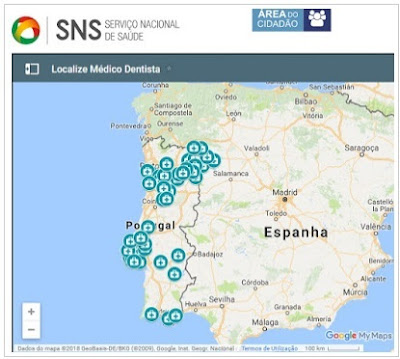
711. Oral Health Consultations at the National Health Service

https://www.sns.gov.pt/cidadao/saude-oral/
Look on the map for the Health Center with the symbol closest to your area of residence. If you are your Health Center, or if you are a Health Center of your Health Centers Group (ACES) or Local Health Unit (ULS), you have access to oral health consultations.
You can make an appointment with your family doctor or, if you do not have a family doctor or the same is not available, another doctor at your health facility and he will give you the orientation for the first oral health consultation.

710. Interview with Miguel Stanley: Oral health is inseparable from general health

Renowned medical dentist is the scientific consultant in the field of dental medicine at Dr. Well's clinics. A conversation about the current moment of dental health in Portugal and the importance of its democratization.
These days, how would you explain the importance of oral health in anyone's life?
I've always had some difficulty understanding why it is that for so many people, the mouth is not part of the body ... I say this in jest because it obviously is. Oral health is indissociable from general health and, moreover, it is inseparable from our happiness and the smile is the maximum expression of it. I believe that the awareness of the Portuguese population about this problem is getting better and, of course, anything that puts people to brush their teeth is good for the population. Obviously in terms of health it is deeply important, but we can not forget the aesthetics, a pleasant smile can change the perception of others about us and can increase self-esteem exponentially, so I am a passionate in this matter.
One of the pillars of his partnership with Dr. Well's, as a scientific consultant in the field of dentistry, is the democratization of access to oral health care. Explain to me a little better what lies behind this concept?
Dr. Well's was born with the goal of democratizing access to quality health services. And knowing that only 5 in 100 Portuguese have the opportunity to put a dental implant, it shows that there are more than we, dentists, could do in the dental medicine industry.
How is the health of the mouth and teeth of the Portuguese?
The health of the mouth of the Portuguese should be seen by segments. I would say the children's is great, because fortunately parents have already learned and are more concerned about washing children's teeth, which is great because future generations will have more oral health. Obviously, the same can not be said of people between the ages of 60 and 100 because they unfortunately lived in an age where there were not many skilled dentists in the country and consequently there are a large percentage of them toothless and unable to afford to even think about rehabilitate your smile. Between these two segments of the population, there is a bit of everything, depending on economic ability and level of education. Obviously you can not generalize because I have experience of well-trained and economically capable people who have had the misfortune of not being well followed by your dentist and have to end up doing very costly and time consuming treatments to regain your smile.
If you were Minister of Health, what are the first steps you would take in the area of oral health in the country?
If I were health minister I would first go around the country to listen to health professionals and technicians, from north to south, to try to understand the difficulties they have. Nonetheless, I think that in terms of dentistry it would put a compulsory school program, a little like what is done in the Nordic countries, and make sure that the population, especially the most deprived, does regular oral hygiene and screening caries and early treatment. I have always found it strange that our taxes are not applied in this aspect of simpler dental medicine and I understand that it is something that should be a right of citizens.
And aesthetic medicine: is it a branch that has definitely entered the day to day of people or is it something reserved only to those who have the means to do so?
Dental medicine is one of the few medical areas that has an absolute 'crossover' between aesthetics and health. I usually say that a beautiful smile is the reflection or mirror of a healthy smile. So the first step to having a beautiful and aesthetic smile is to have it healthy. As such, people can not expect incredible aesthetic results if they do not have the functional and biologically sound part.
Destak        

Saturday, 22 December 2018

709. More than ten thousand private school children do not have access to the dentist's check

The Health Regulatory Entity (ERS) warns that more than 10,000 children are being excluded from the check-dentist program because they attend private schools. The alleged lack of equity in access to health care exists even in cases where children and young people are deprived of and have scholarships to attend colleges, Jornal de Notícias reports.
There is an unacceptable discrimination of those who make their choice for private education, says the director of the Association of Private and Cooperative Education, Rodrigo Queiroz e Melo, noting that of the 10,000 children without access to the dentist's check, about 1,000 have difficulties.
Despite the universal nature of this benefit, the Ministry of Health explains to the Jornal de Notícias that it has privileged the children of public schools and private social solidarity institutions (IPSS) as the most vulnerable and with the most clinical impact.
In 2017, more than 71,000 dental clinics were held in health centers, benefiting about 40,000 children and young people.

Monday, 3 December 2018

708. PORTUGAL: More individuals report unmet needs in relation to oral health care

More individuals report unmet needs in relation to oral health care. Thus Portugal already has a total percentage of 15.7% (compared with 5.5% in the EU), with the lowest income group accounting for 28.8% (EU 10.4%).
The barriers to access to health care remain relevant in Portugal, and especially marked from the socio-economic point of view. An income-related social gradient has been observed for medical treatments in general, but above all a high degree of unmet need, with a marked socioeconomic gradient, in oral health, mental health and medicines. Compared to the rest of Europe, Portugal does not suffer from greater barriers to access, but these barriers are more marked from the socio-economic point of view, in particular with regard to financial constraints.
In this context, three notable and expected situations should be highlighted: iniquity in the use and access to oral health, mental health, and medicines. In these three fields, there are not only strong limitations in access, but these limitations disproportionately affect the poorest. In the case of oral health and mental health, this inequity is explained by the lack of provision of these services in the National Health Service, and the need to be largely satisfied through the private sector, that is, only accessible to those who have insurance or ability to pay.
In the case of oral health, attempts were made to mitigate this situation through check-dentist, to be able to use the private sector, but possibly this initiative failed to reduce inequity.
Thus, it will not be possible to improve access to certain care, nor to reduce catastrophic health expenditures without a determined action in S.N.S. (Portuguese national health service) in the field of oral health and mental health, and in improving access to medicines for the most deprived citizens.
 

Wednesday, 24 October 2018

707. Dentistry in the SNS (National Health Service): an issue that is urgently solved

Urgent preventive medicine, informative, to address the small problems of today that will be enormous tomorrow. But can we continue to be a country that invests and does not reap the rewards?
This is a complex issue that must be tackled in a broad way. The ultimate goal is to ensure the access of the entire population to primary oral health care, without undermining the sustainability of state resources. Is it possible to do so? I think so. This will require a well structured plan that starts from scratch, evaluating all the hypotheses and not a project that starts already guided by a pre-established direction. By this I mean that the plan must begin by looking at the network that already exists, realizing if it is enough, and then yes, setting the course.
In a pragmatic way, we have to recognize that the means of the SNS are clearly insufficient and a large part of the population needs to be addressed which is not covered by subsystems or health insurance and does not have the financial resources to use the private sector . The problem is serious enough and requires urgent responses. It will not be possible to wait for the state to have the resources to create a network, nor does it seem to me the best solution.
It will be important to have the clairvoyance of realizing that the oral health problem in Portugal will only be quickly combated if the existing dental units are integrated into a future network, calling the dentists all to the discussion. I say well: everyone!
There is a need to optimize existing resources by listening to and integrating all dentists, not just large centers, since the reality in the less populated areas of the country is quite different from large urban areas. Taking advantage of the existing network will be a step that I consider vital to solve the serious public health problem that affects a significant part of the Portuguese population.
As we well know the public network of dental care in Portugal is so insufficient that would oblige investments of such order that would walk not for a global solution, but for such a slow and phased solution. Taking advantage of the existing network appears to be an act of intelligence in management. All on the basis of protocol services.
And what services would be provided? I believe that the best solution would be to invest in preventive medicine, with an annual check-up, co-responsible for the patient's oral health. The State should not assume costs arising from the patients' lack of care, but only ensure that users have access to consultations and information on oral hygiene care that avoid more serious problems - and therefore more costly for both parties.A preventive, informative medicine, to deal with the small problems of today that will be enormous tomorrow. Consultations where the patient can diagnose and treat, be directed to correct oral hygiene. This would prevent serious problems by also ensuring the correct use of public services in clinic cases where dental prostheses were implanted (which should obviously be reimbursed in the necessary cases, as in other areas of medicine).
Good management of scarce resources will be the way to find a global solution and not a phased solution. Good management not only of financial resources, but also of human resources. Portugal, with recognized merits in training, has also been an exporter of dentists. The question is: can we continue to be a country that invests and does not reap the rewards? Why not find a way to integrate students who finish their courses in vocational internships?These internships, duly paid, would last for one year. This dental medicine would allow that, at the end of this complementary training, these professionals were better prepared to carry out their activity. These stages and this provision of oral health services to the population would take place in the existing private units, as long as they fulfill the previously established requirements. In this integrated plan, Hospital Dental Medicine should be, above all, aimed at treating urgent situations and not cases of negligence on the part of the patient.
In short, and so that the Oral Health of the Portuguese does not remain hostage to subsystems and health plans, it is necessary to look at what we have in a transversal way and find a solution that allows integrating what already exists, also responding to surplus physicians dentists.

706. ARS / Algarve puts dentists at the service of the population

The Regional Health Administration (ARS) of Algarve announced that, from today, Monday, 13, dentists were placed at the service of the population in the three Groupings of Health Centers in the region. The placement of dental professionals is part of the investment of the National Health Service in the area of oral health that, by the end of 2017, will integrate the specialty in 59 Health Centers nationwide, stressed the institution in a statement.
In an initial phase, the ARS / Algarve has three dentists and their dental assistants at the Barlavento Health Centers Group (ACES) in Portimão; in ACES Central, in Faro; and ACES Sotavento in Tavira. But the number of professionals in the area and the number of locations may grow during the year 2018, admits ARS.
In a meeting with the board of directors of ARS / Algarve, the regional coordinator of the Algarve Oral Health Program, executive directors and clinical directors of ACES, dentists and dental assistants, the guidelines were drawn up on how these new services work, which have the capacity to cover, at an early stage, users with risk factors and other situations that the family doctor considers to be clinically justified.
The referral of the users to the consultations of dental medicine is done through the family doctor. It thus increases the responsiveness of the National Health Service (NHS) in the Algarve to universal and equitable needs, taking into account the most vulnerable groups, says ARS / Algarve.
The institution stresses that there will be progressive access to oral health care in primary health care to guarantee access for people with chronic conditions to oral health care and to evaluate the oral health situation of people with the various pathologies defined and followed in the SNS.
To date, if there is a need to perform apical x-rays, dentists can do so because the cabinets are equipped with intraoral x-ray equipment. The reinforcement of primary health care in the region brings another novelty: from the beginning of December, the Algarve SNS provides for the first time in the ACES, a direct digital orthopantomograph for the execution of panoramic radiological images (digital orthopantomography) - previously possible only in the private health universe - which are available in the ARS / Algarve image filesystem.
 
Consultations in the primary health care of the three ACES of the ARS / Algarve will be able to carry out the following interventions: dental medicine consultation, urgent consultation, definitive direct restoration in composite resin and cement, permanent and deciduous tooth extraction and supra - periodontal maintenance treatment, gingivoplasty and gingivectomy, drainage and sealing of fissures.

Wednesday, 25 July 2018

704. Pilot project of dentists in health centers reached more than 16 thousand users

The DGS reports that the 13 health centers in the initial phase of the project received 16,760 patients in 25,640 dental clinics. The new policy strategy in this area thus addresses the lack of dental medicine in the NHS, seeking to recover from the backwardness which, in comparison to other European countries, is particularly evident in Portugal given its large number of partial or total edentulous .Continuing the strategy initiated with the dental checks, which the Secretary of State says has been particularly relevant for population groups such as children, the elderly and pregnant, the pilot project "Dentists in Primary Health Care" obtained in the first 13 units that the ruler considers very interesting results. This assessment results from two perspectives: on the one hand, that of the users, who recognize that this service was really necessary and among which there were people who had not been to the dentist for 20 years, and on the other hand, of the satisfaction of the dentists who worked where they knew they really made the difference.
As for the balance of this performance, the DGS reports that the 13 health centers of the initial phase of the project received 16,760 users in 25,640 dental clinics. With the exception of cosmetic care, which are not covered by the program, these patients were, in turn, subject to a total of 28,900 basic treatments and 20,270 complementary procedures. If the universe of analysis is extended to the 11 health centers that integrated the program in a second phase of the process, the total accounting includes 32,882 users and 56,824 consultations until the 30th of September.According to the Deputy Secretary of State for Health, the involvement of municipalities such as Arouca, which, before health centers without dental equipment, were willing to pay the necessary investment - in the specific case of this municipality, involved more than 37,000 euros. It is not the responsibility of the autarchy to assume this expense and that is the difference between politicians, Fernando Araújo said.
In its initial phase, the pilot project "Doctors Dentists in Primary Health Care" was implemented in the health centers of Alenquer, Arruda dos Vinhos, Azambuja, Cartaxo, Costa da Caparica, Fátima, Lourinhã, Mafra, Moita, Montemor-o -Novo, Portel, Rio Maior and Salvaterra de Magos.
The second stage also included Arouca, Castelo de Paiva, Celorico de Basto, Cinfães, Damaia, Estremoz, Faro, Freixo de Espada a Cinta, São João da Pesqueira, Moimenta da Beira and Tabuaço.
Already, until the end of 2017, the third phase of the project will extend to the Alfandega da Fé, Algueirão, Bragança, Cacém (Olival), Carnide, Carrazeda de Ansiães, Carregal do Sal, Castelo Branco (Izeda), Macedo de Cavaleiros, Matosinhos (Leça), Miranda do Douro, Mirandela, Mogadouro, Monte Pedral, Moscavide, Odivelas, Ovar, Paço de Arcos, Portimão, Porto (Aldoar, Barão de Nova Sintra e São João), Póvoa de Santo Adrião, Queluz, Santa Comba Dão, São João da Talha, Santo António de Cavaleiros, Tavira, Torre de Moncorvo, Torre de Dona Chama, Vila Flor, Vimioso, Vinhais and Vouzela.