Tuesday, 1 November 2016

661. Portugal: doctors that do not exist

Officially, there are no dentists in primary health care. The medical career dentist is not even provided for in the National Health Service (SNS in Portuguese). But there are thousands of Portuguese who go to the dentist at the health center and thank. They are hired as technicians, assistants, administrative or other professional qualifications. A situation that puts them outside the law.Despite the secrecy, they are precious to many people. Cater mainly patients at risk, fewer resources or people who just family doctors determine. Serve those who can, because some groups of health centers, comes to be a dentist to 500,000 people, or more. Sometimes there are parameters to define who should be attended to, sometimes not. Will be a few dozen, dentists in health centers. Sure no one has yet managed to count them. Most requests for information to the Regional Health Administrations went unanswered. The exceptions are the Alentejo, it says have no dental health centers, and the Algarve, states that there is only one, in the health center of Faro. 
The latest available data show that there are some dentists in some health centers, but also show that the number of consultations of this specialty has always decreasing. The region of Lisbon and Tagus Valley, the Regional Health Administration says in writing that the Oral Health Program in force in this area only includes dental checks. Official data show, however, that there is a dentistry unit that receives users of various health centers in the capital. They work here 7 dentists and 1 stomatologist. We were not allowed to report.
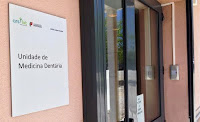
The unit is part of the Shared Services Centers Health Cluster Center Lisbon. It is open from 8 am to 8 pm. The waiting room is a quiet, comfortable place. It is noticed that many are repeat users. All come indicated by your family doctor and here are followed by your dentist. There are children, elderly, chronically ill but who simply can not afford a private dentist. Staff in this health unit were not allowed to testify.
Who they are and how they work - Jose Frias Bulhosa chose not to have private practice. Works in Health Center of Aveiro, and not only. In my health centers grouping'm the only dentist to 369,000 inhabitants. I was put in Vagos 3 years ago, the equipment was not working. Not to be stopped went for consultations Aveiro. They will when the equipment are free when hygienists are not using. Between here and there, there are many revealing cases of missing that dentists do. There are still months identified a woman with a tooth in good sky. The family doctor had never noticed. You would have a 35, 40, did not know what it was. I am also me to remember a 4 year old with 20 teeth and needed intervention 18.
The clients are referred by your doctor or family nurse. Otherwise it would be humanly impossible. The exception are the cases where there is suspicion of malignancy, I always see, anytime. Now with the dentist-check for these situations I can already send these people to another location. Jose Frias Bulhosa also serves children in the region who have exhausted the dental checks to which they were entitled and who attend private schools, which do not receive these checks.
The most difficult cases, said Jose Frias Bulhosa, are the adults with pathology, transplanted with immune problems. These people rarely appear with a cavity, usually they need to deal with 20 or 30 teeth. Most dentists working in health centers know their place can be removed at any time. We should not find excuses. We have therefore chosen, by dentists do not identify which follow.
Antonio is dentist, working in a health center of the central region, but does not exercise is superior technician overall career. I have worked as a dentist, but it was illegal, I can not, if something happens ... ..
A health center of the great Lisbon Joana talks about the risks of working as well. I am better technique, I've been told that I can not anesthetize without permission from the doctor, the truth is that taking our consultation, there is nothing in this area. We are 3, but since we were only two dentists to 400,000 inhabitants and our reference Hospital Amadora-Sintra, has the specialty of dentistry. This query is for risk patients: diabetes, cardiac surgery, transplant, cancer patients. Still, family physicians also in send abscesses. For many people, these dentists are the first and last resort.
Joana does not need to pull the memory to give a few examples: Appeared me a girl of 13 years with a fistula, under the chin, to drain pus for over 6 months. It was a giant external abscess. It is also common to see pregnant women who doctors hesitate to give dental checks for fear of treatment during pregnancy. Then there are those people who enter the vicious circle: do not get jobs because they had the bad teeth, enter the query to take 5 or 6 roots at once, but we can not give prosthetics and they also do not can afford. Also I get to have patients who drop out of consultation by no longer having exemption from prescription charges.
The dentist's career does not exist in the National Health Service, it is therefore not expected to exist in the health centers, but the official price list is posted there. A health center is charged as specialty hospital consultation, costs 7.75 euros, and extraction of a tooth, for example, costs an additional 3.5 euros.Cheques dental yes, dentists do not - Officially, all oral health care within the primary health care is provided by more than 3000 private dentists who have joined the National Oral Health Program. The model is the check-dentist, a voucher for consultation and treatment that is available to children of low-income elderly, patients with HIV-AIDS, pregnant and who has signs or suspicion of malignant lesions in the oral cavity. Rui Calado, director of the National Mental Health Programme explains which are likely to be included new beneficiaries of the dentist-check, but only when there is sustainable funding guarantee. As for the inclusion of dentists in the National Health Service, the costs are considered unaffordable.
Dora Pires
   

Friday, 14 October 2016

660. Oral Cancer: utilization of diagnostic checks is reduced

According to data revealed by the Dental Association (OMD) in the European Day eve of Oral Health, the 4,341 checks issued between March 2014 and June 30 this year were used less than one-third, or 1,315 checks for cancer diagnosis oral. In its initial phase there were some problems with the computer system that makes the issue of checks, said the agency Lusa Pedro Trancoso, the direction of the Dental Association, assuming that the number of checks actually used by users go starting to increase.
The goal of Early Intervention Project Oral Cancer would reach about five thousand annual biopsies and, therefore, it is necessary to increase the checks issued by family doctors, and especially that patients use the network adhering dental checks that they are passed. Despite a reduced rate of effective use of checks for diagnosis of mouth cancer, Pedro Trancoso stresses that the checks execution rate for biopsy is very high, around 90%, which means that suspected cases are being properly directed and monitored.
Of the total diagnostic checks used almost half advanced to biopsy. The 585 carried out under this program allowed to detect 24 cancers and 17 lesions with malignant transformation potential. Pedro Trancoso recalls that 24 cases of detected cancer refer only to early intervention project, with in Portugal many more cases several diagnosed belatedly, which contributes to the mortality rate is less than 50% five years. If the diagnosis is made of early, survival rates can exceed 80%, says the head of the Dental Association.
Arguing that it is essential to increase the use of checks issued by family doctors, the Order believes it is necessary to know the warning signs of oral cancer: wounds that do not heal within two weeks, unexplained volume increases, loss of sensitivity or mobility language.
  

Thursday, 15 September 2016

658. Dental social clinic opens in Setúbal

657. The association "Mundo a Sorrir" already took care of the oral health of 33 thousand Portuguese

Between awareness projects, screening measures or treatments, the non-governmental organization Mundo a Sorrir (World Smile) - Doctors Association Dentists Portuguese Solidarity reached more than 163,000 people over its nine years of activity - with operations in Portugal and several Portuguese-speaking African countries such as Cape Verde, Guinea-Bissau and Sao Tome. in Portugal, the president of the NGO said that were made almost 12,000 screenings and more than 21,000 treatments, especially vulnerable populations. Michael Peacock believes that in future, the work will increasingly focus on the health prevention in a very deprived area in the country.
In the month that the World Smile complete nine years of activity, Miguel Pavão account that the project, which was born out of a personal volunteer experience that the dentist had in Cape Verde with colleague Mariana Dolores, ended up walking to many countries and which continues to struggle for ensuring the universal right to access to oral health care, working with the high-risk groups such as the elderly, children, pregnant women or people with few financial resources. 12 initial volunteers, went to more than 600, including physicians, dentists, hygienists and nutritionists. There are still little care in terms of oral health in the country and little focus on prevention, even in nutritional terms. We have a very system focused not on the right to health but for the right to treat the disease. I think this is the great turning point that we do not treat the disease itself but look at them in an interconnected way, describes the dentist, which highlights the work done in this regard by the Programme for Inclusion and Healthy Life of the World Smile . The project, which has European funding has come through training and screenings to 54,000 children and young people and should end the year with 70,000.
Since they started working in 2005, only Portugal already have 2332 health promotion lectures and hygiene and it is precisely in non-formal education and the introduction of concepts in a playful way that the specialist believes more. Miguel Pavão, covering the country in terms of oral health has improved, especially with vouchers dentist called, attributed to some groups defined as priority by the National Oral Health Promotion Plan. The problem, he says, is that the bet has just been on the side of prevention. Only 3% of healthcare budgets in the European Union that are dedicated to the promotion and health prevention, said, exemplifying that treat oral cancer, including surgery, chemotherapy and radiation therapy, can cost 100 000 euros, a value that says that would give do training in this area throughout the country. The NGO has no direct links to the check-dentist, but the dentist says they have had a concertation logic and adapted programs to help that policies like this are best executed and without the work of volunteers overlap to what exists in State. Not everyone knows that you are entitled to checks or how to use and screenings and activities help in this direction, illustrates.
The inequities in access to oral health care continues to be a problem in Portugal, with most of the treatments to be held outside the National Health Service. In fact, in June the Regulatory Authority of Health (ERS) published a study where ruling on dental checks available to some risk groups under the National Oral Health Promotion Plan. In the document, the ERS believes that the program should be extended to children and youth in private schools and also to non-elderly beneficiaries of the solidarity supplement and even to pregnant women who are not followed in the National Health Service.
For now, only children aged 7, 10 and youth 13 and 16 years who attend public schools are entitled to receive these checks in the amount of 35 euros each. Until the age of six checks should only be given to serious cases. The study also highlights other limits of this plan, such as those relating to the setting of a maximum number of dental checks to be allocated to each group. The ERS adds, moreover, that most dentists think that the number of checks and the value of these are not compatible with the needs of the beneficiaries.
Romana Borja-Santos
   

Saturday, 3 September 2016

656. New research project wants to make dental care in Europe

A new research project, funded by about 6 million euros by the European Union wants to revolutionize the practice of dentistry and oral health, shifting the focus of dental treatments for preventive practices.
According to EU data, dental treatments have an estimated cost of around 79 billion euros annually in the European Union.
The project will last four years and will be led by the University of Leeds, the Academic Centre of Dentistry Amsterdam and the University of Heidelberg. The goal is, by European health data, work together with dental professionals and insurance companies in order to identify strategies for the prevention of oral health problems in each of the European countries.
The World Health Organization has said that oral diseases are the most common chronic diseases to humans. We want to change that, says Helen Whelton, Rector of the University of Leeds and responsible for the project. The hope is that, by evaluating the performance of dental professionals, we can implement change and encourage a shift to preventive practices in dental care.
The initiative will evaluate health data from a total of eight countries such as the UK, Denmark, Germany, Hungary, Ireland and the Netherlands.
Ana Rita Costa
  

Tuesday, 16 August 2016

655. Health space serves population Mire de Tibães

In order to provide citizens with access to basic and primary health care, with the provision of various services, the project Health Area grew implemented by Mire Parish Council Tibães.The intention of the project does not involve the replacement of the health center, but to offer an additional option of proximity to the population, focusing on high competence of professionals who provide services there.We assess the needs in the middle where people are located. Sometimes the simple fact that people enter the health center hinders the expression, because not always verbalize the needs they feel and sometimes the values ​​are changed one bit. We know that some people often change, for example, the value of blood pressure. According to the health profile of the Northern region had to examine factors associated with excess weight, smoking, alcohol consumption, diet and medication regimen, explained Adriana Barbosa, licensed nursing and mentor of the project.In parallel with the work developed with the adult population, the Health Zone also works with children. In the Kindergarten has gone very well. Children take well the program at this time is devoted to oral health. We are teaching how to be cleaning the teeth, what the benefits of proper washing, which foods are good for teeth, which are bad, etc. It is a very playful and interactive component so we can convey the message, said Adriana Barbosa.José Magalhães, president of Mire Parish Council Tibães, explains that the project aims to continuous improvement and the identification of valences that can be integrated into the initiative to contact the population.Initially, the professionals involved in the health space carry out an evaluation of the patients who will dictate its continuity or not this service, depending on the loyalty of the population.

654. Braga will offer 6,000 dental consultations per year

The Braga council approved Monday, Braga project Smiling, which aims to ensure the free access of the poorest people to oral health care. The program will provide 6000 consultations, in partnership with the NGO World Smile, an investment of 200,000 euros. To benefit from this service, users will have to be marked by the Social Action services of the local authority, the Parish Councils and IPSS of the county, as explained by the Braga Municipal Council (CMB) in a statement. Additionally, this action will also cover all children and the elderly in the county, with several actions in the 1st cycle schools, nursing homes and day centers in the county, promoting oral hygiene and the training of technicians and professionals work in these spaces Braga to Smiling will be developed in partnership with the NGO world smile that in nine years of existence, has conducted about 20 projects related to oral health, they were beneficidas more than 170,000 people worldwide . With this partnership, it is expected that more than 5000 children and 500 elderly county benefiting from this action will perform to a total of more than 6,000 consultations per year. This is a pioneer project in which the city of Braga takes health support policies among older; education of the younger population and also a social inclusion policy, with the possibility of greater integration into social and professional level who have no access to oral health care, says the president of CMB, Ricardo Rio, quoted by the same statement.

Sunday, 24 July 2016

653. Looking for volunteers to treat children's mouths

The Good Dentist project needs volunteer doctors in the municipality of Cascais. Thank needy children. The mission is simple: to improve the oral health of underprivileged children and young people aged between 11 and 17 years, providing them with free treatment until they are 18 years. Work that the Panel of the Well has played in Portugal since 2010. And it wants to continue to pursue. But it needs volunteers, dentists that offer their time, something goes missing. Cascais is even a county where there is a risk of the mission not be brought to fruition.
Half an hour a week or 15 to 15 days is the time that dentists have to offer in offices, explains the Destak Alaize Maria da Silva, dentist, volunteer and coordinator of the Good Dentist Project in Cascais, where there are already 30 volunteers. But more are needed to join the 550 that exist all over the country. The benefits for children are many. It is not only safeguarded the oral health as improves their self-esteem. The children come to us at the office with his head down, shoulders hunched because they are ashamed. To be dealt with, take the hair out of her eyes. Will now be integrated and have other income, he adds.
And again calls: what we need is volunteer dentists. More information at:

Saturday, 2 July 2016

652. Study released twice ...

The World Day of oral health in Portugal was celebrated this year in our country with a study in which they had already been presented the findings at the celebration of the World Day of oral health in 2013. Only someone distracted was thinking it had been presented a study again, for this III National Prevalence Study of oral Diseases it has been done for several years and does not portray the oral health of children and young people currently in Portugal.
It was good that the Ministry of Health and the Dental Association had specified the specific date on which the study was conducted, since the same study served to celebrate the World Day of oral health in Portugal in several years.
With nothing new in oral health in Portugal, forwards the reader to the conclusions of the study published in this blog in April 2015.

Wednesday, 15 June 2016

651. More than half of children aged six and twelve years had caries

In the oral health of young people, Portugal is on track, although there is still much work to do. The numbers are impressive: at the beginning of this century only 33% of children under six years were free of cavities, in 2013 more than half (54%) were already in this situation. A similar trend to that seen in children of 12 years this year, 53% had never had tooth decay. As age advances, the situation is not so positive - at 18, only a third (32.4%) of young people have never had caries lesions - but this increase is expected as we age.
Prevalence data are the third National Study of Oral Diseases 6, 12 and 18 years of age that the PUBLIC had access and that this Friday will be announced at a ceremony to mark the World Day of Oral Health. Prepared by Health General Directorate in partnership with the Dental Association (OMD), the study allows to realize that, besides being to reduce the number of children and young people with caries, the basic oral hygiene habits in children and young people are improvement: while the six years 79% of children said brushing your teeth every day, to 12 are almost 90% the guarantee that do it and, at 18, the percentage rises to 96%.
All indicators improved. We move to a situation where the level of dental caries is already very reasonable compared to the European average, says Paulo Melo, one of the authors of the study and general secretary of the OMD. Evolution was indeed significant, to believe the data from this study: in children six years between 2000 and 2013 the number of dental cavities decreased by 21%. But the reduction of tooth decay is not the only good news that emerges from this work. It is also favorable developments of the treated teeth and the number of missing teeth and this improvement cuts across all regions of the country.
Over that period, to 12 years average of decayed teeth per person fell 50%, while the average number of teeth treated increased by 15%, which means that two out of three decayed teeth are treated, further underlines the OMD. Disease levels are measured using an average rate per person which counts the number of decayed, filled and extracted (lost), the indicator that is used by the World Health Organization (WHO). Featured deserves the fact that the results of this index to 12 years have already exceeded the targets recommended by the WHO in 2020. In addition there are fewer people with caries, there are fewer individuals with severe carious lesions, synthesizes Paulo Melo.
The improvement observed in the permanent dentition in children and young people under the age of 18 is justified largely due to the National Program of Oral Health Promotion (checks-dentist called) that was launched in 2009 for these age groups. This program allows children, even the poorest, to access dental consultations which, in addition to treating any injuries, put fissure sealants on the teeth to prevent the onset of disease and also learn oral hygiene (brushing teeth at least twice a day) and healthy eating.
Paulo Melo is optimistic, because it believes that the focus on prevention and early treatment if it will translate into huge gains in the future. Surely we will not have, in 30 or 40 years, a number of edentulous elderly as high as we now anticipate. According to the results presented barometer in 2014, about 7% of the Portuguese have a single tooth.
The general secretary of the OMD also recalls that there is still a way to go to achieve the goals set by the WHO for 2020, especially in early childhood, the temporary teeth (called milk teeth). It is necessary to reduce the percentage of children who reach the age of six without cavities. Here, there is still some work to do, but it has to be done by parents and families, accentuates.
Children and young people are the main users of the dentist-check program, which also covers the elderly with the solidarity supplement, pregnant women and people with HIV. Last year, the rate of use of dental checks rose to 74%, having been used in total 406,689. Sixty percent were used in preventive procedures, the application of fissure sealants. In total, 4,334,877 caries were treated for only 207,239 tooth extractions, refers to OMD. Since the beginning of this program have been used 2,378,363 checks.
Alexandra Campos
       

650. Oral Health Program: Evolution, instruments and results

The program of oral health in the national health service Portuguese (SNS.) started with the promotion of oral health in schools, and later extended to preventive and curative measures. Preventive measures were introduced at an early stage with the entry of oral hygienists for the SNS. As these professionals were insufficient to meet the population's needs, the policy adopted to address this problem was contracting with private service dentistry. Including well beyond the application of fissure sealants also dental treatments. In 2008 this contractual model was revised and implemented the dentist check.
After more than 25 years of the program, children and young Portuguese still have significant oral health problems. In the sample studied was found that at 7 years of age, only about 45.5% of children have free teeth cavities. WHO advocated that for 2010, 65% of children were free of caries at 6 years old. According to WHO guidelines the DMFT index at 12 years should not exceed 1.5, as of 2010. The data collected in the study this value is exceeded only in children 10 years but approaches (1, 2), and at 13 it reaches a considerably higher value (2.1).
The study data show a half accession of children to a totally free and as demonstrated program, applied to children who actually had oral health needs and did not use dental check (24.7%). However virtually all children using the check complete the treatment plan. The exception that occurs at age 10 related to the premolar eruption suggests a review of the age cohorts assignment dentist check.
The pre-screening of children as a procedure to adopt in all situations, which may be performed by dental hygienists employed by the SNS, would mean a reduction of program costs and would ensure oral health services accessible to children and young people, integrating strategies universal, that is directed at the entire population, selective, when we plan to intervene on risk groups and indicated, because those who have the disease need regular oral care. The definition of children at risk or risk groups as the basis for the definition of health policies is widely held in the literature.
Considering the evidence that current methods and to provide oral care systems are relatively inefficient, expensive. The Health Management's mission is to improve the functioning and increase the efficiency and effectiveness of health institutions, promoting management models that allow greater administrative and financial autonomy and the corresponding responsibility of the respective management bodies for achieving results in terms of health gains. This mission can only be realized through the development of instruments of influence and monitoring and evaluation criteria to enable support their development (Ministry of Health, 1998).
Health services are an integral part of political, economic and administrative structure of any society. Simply import a healthcare model for a society without taking into account its characteristics may have negative effects. The country that imports these models may not be able to bear the costs. Example of this is the application of models of developed countries to least developed countries, based on curative measures, based on clinical care by highly specialized professionals (Traebert, 1996).
Policies should be geared towards promotion and prevention strategies in public health. The question of oral diseases is simple and inexpensive public health measures are available to prevent and control because the causes are known: diet, poor plaque control, tobacco, stress and accidents. The main factor that makes the dental treatment so expensive is the resulting limitation of the dominant restorative approach to treating and preventing disease. Although oral health is the goal to achieve was diverted for dental treatment, which is a strategy and not a goal. Treatment strategies can ensure better care for some and a dependence on professionals, but little is done in terms of health promotion and intersectoral work. Approaches with clinical and intensive capital base to treat diseases are unrealistic given the high costs and inadequate coverage (Sheiham, 2005).
The World Health Organization points to 2020 targets for oral health that require strengthening of health promotion and prevention of oral diseases, and greater involvement of health professionals and education, public and private services.
Future actions to improve oral health and reduce inequalities require a public health approach. Clinical prevention and education for oral health alone has a minimal effect and may increase inequalities in society. A health program to look for the root causes of poor oral health through an implementation with a wide range of complementary actions is the best way to success.
Estimate the need for oral health care is essential for public health. So far no progress is being made in this area. There are major deficiencies in the regulatory approaches of oral needs. An alternative approach to conventional, the sociooral approach that takes into account the impact that oral state has on quality of life, desire of people and behaviors, their propensity to change behaviors and importance, showing that the recommended treatment is effective.
European governments are making reforms in their oral health systems to do a thorough analysis. The big challenge is the ability to control what happens within the system. Problems such as the induction of demand and over-treatment. The development of appropriate measures and appropriate incentive mechanisms are more important in the acquisition of equity and success than increase the number of dentists (Batchelor, 2005).
The economic analysis of the health sector can make an important contribution in making decisions in this health sector. Although some specificity of oral health services, the same concepts and methods applied to the understanding of health services can be applied to the analysis of oral health services.
It would have been important to understand the reasons for non-use of the check, by applying a survey of parents. This study is intended as a contribution and the awakening of interest for future research in the area of public service partnerships with the private dental service to the detriment of other policies.
Estela Maria Malheiro de Castro

Friday, 27 May 2016

649. Mission Oral Health: Portuguese Children do not make proper oral hygiene

Within the Mission Oral Health, a partnership between Colgate and the Portuguese Association of Oral Hygienists, Colgate conducted a survey which reveals that Portuguese children do not have a proper oral hygiene routine. The survey was conducted on a sample of 500 Portuguese women with one or more children, aged between 2 and 7 years.
The findings show that many children do not properly brush their teeth, resulting in a depletion of the oral health of the Portuguese child population. Moreover, globally parents reveal difficulty in getting the children to do the correct tooth brushing and in terms of time devoted to oral hygiene, both the form and scope of the wash.
The results also indicate that 31.4% of mothers surveyed revealed that have some or much difficulty in making their children wash their teeth regularly and almost half (47.6%) reported that their children do not brush their teeth for a sufficient time. About 40% of children just brush the front teeth and more than 12% of the children of the respondents already had one or more teeth extracted.
The mothers questioned also believe that children's oral hygiene habits are directly associated with the example set by parents, so almost 55% of mothers say brushing your teeth while the kids to set a good example.
According to Carlos Pereira, dental hygienist and responsible for Relations Professionals Colgate in Portugal, it is very important to prevent oral diseases. With simple acts of prevention, which must be daily and shared with the family, we keep our oral health for life. It is important to teach children early to the oral hygiene care correct. Parents should start by giving an example: take good care of your own teeth conveys the idea that oral health is something to cherish. To facilitate the acquisition of teeth washing habit (essential to good oral health), parents can try for example to make this moment a joke. Instill in our children a good oral hygiene routine from childhood is an investment in the health of children with visible results in the future.
Ana Rita Costa
    

Monday, 9 May 2016

648. ACCESS TO CARE DENTAL: Portuguese are the most complainers

The OECD report - Organisation for Economic Co-operation and Development - "Health at a Glance - Europe 2014" (PDF) released this week reveals that the Portuguese are the Europeans who most complain of unmet dental care needs.
Among the 35 countries analyzed in the report, including all member states of the European Union, and in relation to complaints about oral health care, along with Portugal are countries like Romania, Bulgaria and Italy. The OECD also points out in its report inequalities, including in Portugal, access to oral health care among the highest social classes and lower.

647. Dentist will treat the elderly at home

The initiative was the idea that anyone who is bedridden with little physical mobility or dependent on others, you need a good oral hygiene to achieve better health. It was precisely this thought of Sonia Santos, medical dentist working in the areas of Peso da Régua and Vila Real, Tras-os-Montes. The project is unique in the country and, for now, the dentist makes consultations at home only in these areas and that type of users.For years, consultations were free. About three years ago, Sonia began to charge the same as a query in clinics where she works: 80 euros. But journeys at home are still not charged. A small case that fits in a kind of air bag is brought home to the users. These people who are bedridden, it is easier to have someone to care for them for basic care than oral hygiene because it is always a more personal area. These people start to have plaque, tartar, cavities. They are suffering. Stop eating. To be a full physical health, we must address the oral health, explains Sonia Santos.
Consultation at home is almost equal to what is done at the clinic. Three years ago we do all kinds of home service: facelifts, cleanings, extractions. Only place implants and advanced surgery is that it is impossible to do at home, said.There were two cases that marked this medical dentist. The first patient who attended was morbidly obese and was bedridden. I could not do anything when I got there. It was treated and only past eight days is to gather all that was possible and went to her house. Shocked me because there are people who die with the wrong infection and she was in that situation, recalls Sonia Santos. The other case was a boy of nine, paraplegic, who made a tooth extraction. It went well, he says.According to the doctor, are the users themselves and the families of those who call for it to be done the treatment at home. They do not see it as a luxury, but as a help, since many can not afford to take them to the office nearest dentistry.
Ana Sofia Coelho