Thursday, 2 February 2017

671. PORTUGAL: There are only 20 dentists for all hospitals and health centers

Every year, between 500 and 600 dentists are trained on average in Portugal. But for those who leave college, the options are basically two: private medicine or emigration. Oral health is still a very limited public service reality. About 20 dentists work in health centers. That is, one for every half million users. For the first time a government has assumed that this is a priority and by the end of the year they have started pilot experiments with dentists in primary health care. The proposal of the Order of Dentists was delivered yesterday to the Ministry of Health.
Of the 20 dentists working for the National Health Service (SNS in portuguese), the majority are in the Lisbon and Tagus Valley region, six in the cluster of health centers in the north, two in the center and one in the Algarve. The pilot project is designed to meet the needs of an economically disadvantaged and chronically ill population. But in the future, what is wanted is that these basic care, such as derangement, devitalization, extraction of teeth or prostheses, can reach all by the public service.
This is what a large part of the population needs and which are the most sought after care. We welcome the initiative of the Government, which to be realized is a huge advance in the access to basic oral health care. It will meet the requirements of the SNS in the equity of access, says to the Orlando Orlando Monteiro da Silva, canon of the dentists. So far, a portion of the population - pregnant women, children and young people, elderly people with solidarity and HIV patients - have had access to these care through the dental check, which is important to maintain, as it has had considerable health gains, Says the baston. Last year, 545,000 dental checks were issued and 413,000 were used. In March, the project will be extended to 18-year-olds. In an interview with DN Henrique Botelho, coordinator of the Reform for Primary Health Care, explained that this is a project that will continue.
The World Health Organization recommends one doctor dentists for every 2500 inhabitants. Portugal more than meets the eye, but only in the private sector, where there are more than five thousand clinics: one dentist for every 1236 inhabitants. The country has 8500 dentists registered in the Order and another 1200 are working out of the country, mainly in England (59%) and France (12%). But does the offer translate into care? More than 50% of the population does not have access to basic care. An important part can not afford them and health insurance that guarantees this specialty is expensive, he says, considering there must be a dentist doctor by health center and in the larger ones more than a professional.
Since its inception the SNS has never had oral health care. First there were not many professionals, then it was a political option, possibly it was thought that it was not fundamental. There is the realization that it is a specialty that is not cheap, that you need financial resources to equip the spaces. It is regrettable that there is equipment in primary health care that has never been used, he regrets.
For Rui Nogueira, president of the association of family physicians, having dentists in health centers should be a top priority, suggesting two ways of doing this: one is dentists in the health centers, the other is conventions with the offices And ensure direct access. We have to ask ourselves if this is an easy service to install and maintain? A convention system can guarantee a faster response and with less costs. In the more peripheral and isolated health centers we could have the service. The two solutions can work together. The doctor also says that it would be essential to have oral hygienists in all health centers.
Another priority, says Orlando Monteiro da Silva, are dentists in public hospitals to team with the stomatologists, a specialty that has 167 professionals working in the SNS. More than 80% are over 50 years old. It is necessary to think in the long term in mixed teams if we want to give a multidisciplinary coverage. We need to have teams in hospitals to treat trauma, operated patients, hemophiliacs, deep patients who need anesthesia for dental treatments, oral cancer, he says.

Tuesday, 24 January 2017

670. Dentistry and the National Health Service (SNS)

The degree in Dental Medicine has existed in Portugal since 1976. Its duration was six years, such as the degree in Medicine. The first three years (basic cycle) were superposable to the first three years of the medical course, with the last three (clinical cycle) referring to the study of oral cavity pathology and annexed structures. However, in these last three years the patient was not seen as a whole, being a part of the curricular plan referring to systemic manifestations of oral pathology and vice versa. With this curricular profile, the doctor-dentist would then be a physician who underwent an early differentiation process within medicine.
The statutes of the
Order of Dentists refer that the doctor-dentist is responsible for the study, diagnosis, prevention and treatment of diseases of the teeth, mouth, jaws and attached structures. In this way, dental medicine as an independent profession, as in any other medical specialty, can apply medical-surgical therapy, with autonomy of prescription, the right to issue medical certificates and death certificates and others.
The contribution of dental medicine to the health of the population is not exhausted in the strict field of oral health, nor in practice as a liberal profession. The doctor-dentist should always act as an important agent for the integral promotion of health. The importance of a well-treated mouth that is not the focus of infection and / or inflammation would save millions of euros annually in the treatment of diseases such as cancer, diabetes, kidney disease and cardiovascular disease.
In this way, it is crucial to actively involve dental practitioners and other professionals working in the field of oral health in multidisciplinary teams and in activities to prevent and treat all diseases. It would be an invaluable contribution in promoting the health of populations and in the well-being of patients.
With the evolution of medical-dental science and art, a great challenge arises, at the beginning of the 21st century: to be fit and qualified to intervene in a hospital environment and in any NHS institution (health centers, family health units and others) . In addition, dentists can act in the private clinic, with sometimes high-risk interventions in medically compromised patients, it is not understood that in these 40 years dentistry is practically excluded from the National Health Service. As an example of the hospital area, these professionals could benefit from the support of other specialties in multidisciplinary teams, with undeniable benefits for the National Health Service and patients.
It seems that the political power finally looked closely at the importance of oral health, and there are signs of a political will to take clear and unambiguous steps in this direction. If this is the case, it will be a historical political decision, perhaps one of the most important ones, right after the creation of the National Health Service in 1979.
Well to the Portuguese Association of Hospital Dental Medicine (APMDH), which, with the commitment of its leaders, friends and associates, have been clamoring for this for more than a decade. In fact, the birth of the APMDH came to institutionalize a struggle of its founders initiated in the previous decade. Welcome to the North Regional Nucleus of the Portuguese League Against Cancer NRN-LPCC and its leaders, which, together with the APMDH and its clinical body of volunteers, have already carried out more than 6500 free consultations for the early diagnosis of oral cancer. The current Government wishes to express its willingness to put oral health and dentists in the place of general health and medical science, respectively.
To end a word of hope: that the implementation is properly carried out after listening to the institutions that have evidence in this field ...

João Leite Moreira - Dentist, Coordinator of the Unit of Stomatology and Dental Medicine of the Portuguese League Against Cancer - Regional Nucleus of the North and Portuguese Association of Hospital Dental Medicine
Jornal de Notícias
      

Tuesday, 10 January 2017

669. Portuguese health service drops to 20th place in international ranking

Inequality in access to health services, delays in surgeries, difficulty in getting treatment abroad, high numbers of cesareans, difficulty accessing family doctors and oral health care outside the National Health Service are some of the areas that are contribute to a more negative evaluation of the Portuguese health system. According to the international ranking made by the Swedish organization Health Consumer Powerhouse, Portugal appears in the 2015 edition in the 20th place of the European Medical Assistance Index, when in 2014 it was in 13th place.
(...)
As for Portugal, the country appears in red on topics such as direct access to consultations with medical specialists, waiting times for non-urgent surgeries, Staphylococcus aureus infections resistant to the main antibiotics, dialysis out of hospital, access Dental physicians and the consumption of alcohol. In yellow, issues such as the publication of data on the quality of services provided, access to innovative drugs, consultations with the family doctor on the day, waiting time for oncological treatments or some complementary diagnostic tests. The cases of depression, years of life lost and cancer survival are also cause for concern. On the contrary, the country achieves green results in subjects such as electronic prescription, access to a health line 24 hours a day (Health Line 24, 808 24 24 24), reduction of deaths from stroke and stroke, cataract surgery, Kidney transplants and vaccination.
(...)
On the other hand, the Health Consumer Powerhouse highlights that the best results are found in countries with health systems based on social insurance - Portugal has a public service financed essentially by taxes.
Romana Borja-Santos
  

668. The current relevance of dental medicine in Portugal


Thursday, 29 December 2016

667. Monteiro da Silva re-elected president of dentists

Orlando Monteiro da Silva was re-elected to a new four-year term as president of the Order of Dentists (OMD). The elections were held this weekend under the new statutes of the OMD.
In addition to the election for the office of president, the various governing bodies were elected, including the new General Council, one of the main novelties of the new OMD statutes. The General Council is a body that will include 50 members of the MDG from around the country and will function in a similar way to a parliament.
An independent, single list was also elected for the Deontological and Disciplinary Council and led by the dentist Luis Filipe Correia.
The priority of the new team will be the development of a pilot project for the inclusion of dentists in health centers and family health units. This project will be prepared at the request of the Ministry of Health and reflects one of the requirements of the program with which List A presented itself to the elections: the need to guarantee the access of the whole population to oral health care.
The list led by Orlando Monteiro da Silva also intends to focus on the training and qualification of dentists, improve the organization of the OMD and the regulation of the profession in accordance with the new OMD Statute, according to a press release.
Orlando Monteiro da Silva believes that this re-election marks a new phase in the life of the OMD. The new statutes bring new challenges and the creation of the General Council will allow for greater plurality. In total, it is a team of 104 people of excellence, available to take on the new commitments, arising from the new challenges that the profession is to be placed.
Oje 

Monday, 28 November 2016

665. Ten Sick Teeth for Portuguese: Portrait of a Country in which Almost Everyone Has Had a Caries

The big problem is that we have a very high value of teeth lost due to caries, surely because people look for the dentist very late, says the coordinator of the Oral Health Program of the Directorate-General for Health. Only 3% of adults in Portugal Dental caries problems, with the situation worsening in the elderly, who still have on average 11 teeth totally lost, according to an official study.
The third National Study of Prevalence of Oral Diseases was conducted in five age groups representative of the Portuguese regional and national population, according to criteria recommended by the World Health Organization (WHO). For the first time, age groups of the adult population were included in the National Prevalence Study of Oral Diseases, with the children, previously studied, showing "significant improvements" in their dental health.
The group of 35-44 years is the great surprise of the national study. Virtually all people have had contacts with caries. Only 3% of adults in Portugal never had caries problems. From a certain age, we can expect that all Portuguese have or have had problems related to dental health, said Rui Calado, coordinator of the Oral Health Program of the Directorate General of Health. The study identified an average of 10.3 teeth with problems per person, but concluded that almost five of those teeth are already treated, and four are missing teeth.
The big problem is to have a very high value of teeth lost due to caries, surely because people look for the dentist very late. But access to dental medicine exists and was verified, because of the 10.3 with problems, only 1.5 are to be treated, explained Rui Calado. In fact, the levels of membership, access, are news for us. We were expecting worse access levels. What happens is that people have access but they look for the dentists very late, he added.In the group of the elderly, between 65 and 74 years, there are an average of 15 diseased teeth per person, 11.5 of which are already totally lost teeth, in which the only alternative is rehabilitation through prostheses. The only solution is rehabilitation. The form has to be thought and studied because any account, however slight, indicates that we are talking about astronomical values, if we want to make a public intervention, said the coordinator of the Oral Health Promotion Program.
With regard to children, the DGS says that health gains have been made clear by the development of the Program (which provides dental checks, among other interventions), with more than half of children aged six and 12 being totally free Of cavities and with all healthy teeth. The average number of teeth with problems is 1.6 in six - year - old children and 1.2 in children of 12, which are halved compared to what was found in the 2000 study.We have an excellent dental health situation in children up to 12 years of age, said Rui Calado, considering that the application of sealants promoted by the Oral Health Program has been working, as well as treatments performed through dental checks. The National Oral Health Program, which has been developed in partnership with the Ordem dos Médicos Dentistas, promotes the application of fissure sealants in healthy permanent molars in children and allows other treatments through dental checks provided at 7, 10, 13 and 15 years.

664. Dispatch number 12889/2015

Ordinance number 301/2009, dated March 24, regulates the operation of the National Program for the Promotion of Oral Health, regarding the provision of personalized oral health care, preventive and curative, provided by specialized professionals, providing, throughout Access to oral health care to various target groups. At this moment, children and young people under the age of 16, pregnant women in the National Health Service, beneficiaries of the solidarity supplement for the elderly and users infected with the HIV / AIDS virus benefit from this program. Through Order number 686/2014, dated January 6th, the said Program was extended, to include, also, the early intervention in oral cancer.
In this context, the third National Study of Prevalence of Oral Diseases revealed that in recent years there has been a marked reduction in the levels of disease among children and young people who have benefited from a long work of promoting and preventing oral and , On the other hand, an increase in the number and effectiveness of the treatments performed, which has resulted in an enormous improvement in the dental health situation of this target group.
It was noted, however, that children and young people with special needs do not always benefit from the National Oral Health Promotion Program, so the requirements that establish access to it are now defined.
It has also been found that users infected with the HIV / AIDS virus, for whom it is determined that they may use up to six checks - dentists may present new treatment needs and, in view of the increased risk of health problems In these users, additional cycles are now provided.
Therefore, pursuant to the provisions of articles 2, paragraph 2 and 3 of article 7 of Administrative Rule number 301/2009, of March 24, I determine:
1 - The National Program for the Promotion of Oral Health (PNPSO) is extended, to include:
a) 18 year olds who have been beneficiaries of the PNPSO and concluded the treatment plan at the age of 16;
b) users infected with the HIV / AIDS virus who have already been covered by PNPSO and have not been receiving treatment for more than 24 months;
c) Children and young people of 7, 10 and 13 years of age with special health needs, including those with mental illness, cerebral palsy, trisomy 21, among others, who have not yet been covered by PNPSO.
2 - The enlargement foreseen in the previous number is:a) 18-year-olds who have been beneficiaries of the PNPSO and completed the treatment plan at the age of 16, a dentist's check is awarded;b) Patients infected with the HIV / AIDS virus who have already been covered by the PNPSO and who have not been treated for more than 24 months, are allowed access to a cycle of treatments composed of up to two dentist's checks, which can be repeated Not less than 24 months;c) Children and young people of 7, 10 and 13 years of age with special health needs, such as those with mental illness, cerebral palsy, trisomy 21, among others, who have not yet been covered by PNPSO, and following screening promoted by the Health unit of the National Health Service:i) A check-dentist or referral for Oral Hygienist is awarded;ii) If the child or young person is not expected to collaborate in an oral health consultation, in particular because sedation may be necessary, referral by the family physician, through the Time and Hour Consultation, to the hospital stomatology services Of your area of ​​residence.
3 - This order shall take effect on March 1, 2016.
November 9, 2015. - The Minister of Health,
Fernando Serra Leal da Costa

Saturday, 12 November 2016

663. Prevalence of oral diseases decreased significantly in children and young people

Data on the prevalence of oral diseases are included in the report presented by the Directorate-General for Health and Health of the Portuguese - Perspetiva 2015 (pdf). The results of the new studies on the prevalence of oral diseases among children and youngsters up to the age of 24 show a trend towards general improvement that covers all ages.
The severity of dental caries in the permanent dentition at 15 and 18 years has been declining consistently since the year 2000.
At 18 years of age, disease levels, measured through the CPO index - number of decayed and extracted teeth per patient, show a decrease from 4.7 to 2.5. The percentage of young people with at least one permanent dentition sealant increased from only 19.8% to 29.3%.
The number of 15 and 18 year olds with healthy gums practically doubled from 21.1% to 41.8%, confirming the importance that is increasingly given to oral hygiene, since 96% of 18-year-olds reported brushing their teeth every day.
As early as March, data on children aged six and 12 years showed a reduction in the prevalence of oral diseases. At age six, 79% of children claim to brush their teeth every day, at age 12 they are almost 90%.
According to Paulo Melo, the secretary general of the Dentistry Doctors (OMD), this improvement in the oral health of the younger Portuguese is due to three factors. Firstly, the existence of a public oral health program that includes the dental check and allows the youngest to be regularly followed by dentists. Secondly, because this program teaches to prevent oral diseases and introduces the habit of brushing teeth at least twice a day and also allows these young people to be treated when the disease is still in its infancy. This study then demonstrates the importance of the role of Portuguese dentists in the oral health of Portuguese young people, who are on the right track in the teaching of preventive care and in the treatment of cases of illness.
Faced with these good results, Paulo Melo believes that an extension of the National Program for the Promotion of Oral Health should be studied in order to cover more poor sections of the population. Dental consultations are practically non-existent in the National Health Service (SNS), and it is therefore imperative to create conditions for all Portuguese to have access to oral health care. Whether with the integration of dentists in public hospitals and health centers, or through conventions between the state and private clinics and clinics.
The data on the prevalence of oral diseases are part of the report presented by the Directorate-General for Health 'The Health of the Portuguese - Perspectiva 2015', which highlights the need for an integrated approach to the various medical specialties in the prevention and treatment of Diseases that most affect the Portuguese.
The DGS report concluded that poor nutrition is the factor that robs the Portuguese of more years of healthy life, and as the Secretary General of the OMD points out, is also the main risk factor for oral health as well as tobacco.
The dentist can play a decisive role since our mouths accurately reflect the foods we eat with serious dangers for diseases such as diabetes and cardiovascular diseases, which especially condition oral health and are also conditioned by oral diseases.
There is here a work of general health promotion that oral health can and should play, making a very important contribution to prolong life, and especially the quality of life, of the Portuguese.

Tuesday, 1 November 2016

662. Teenagers do not brush teeth daily

Teen is rebellious, not only when you want to leave and return later, as time to brush your teeth. A survey by the Medical School of the University of Porto in Portugal, revealed that 20% of adolescents do not brush their teeth daily and only one in four brush your teeth two or more times a day.According to pediatric dentistry professor at the USP School of Dentistry, Mariana Minatel Braga, the most common oral health problems in adolescence are caries and gingivitis, results of this neglect of hygiene. Often, it was a child who did not have these diseases and start to present them because of typical changes of adolescence and passing from father responsibility for the child, he says.On the other hand, it is known that a child who had caries in children is most likely to have also decay in adolescence. This is understandable, because the bad habits related to oral health tend to perpetuate from one stage to the other and may even worsen in adolescence, says Mariana.According to expert in relation to the gingival diseases, adolescence may be a stage at which such problems are facilitated due to hormonal changes. However, without biofilm (plaque), they do not occur. In addition to the hormones (which are facilitators) should be careless with hygiene, otherwise not occur such kinds of events.

661. Portugal: doctors that do not exist

Officially, there are no dentists in primary health care. The medical career dentist is not even provided for in the National Health Service (SNS in Portuguese). But there are thousands of Portuguese who go to the dentist at the health center and thank. They are hired as technicians, assistants, administrative or other professional qualifications. A situation that puts them outside the law.Despite the secrecy, they are precious to many people. Cater mainly patients at risk, fewer resources or people who just family doctors determine. Serve those who can, because some groups of health centers, comes to be a dentist to 500,000 people, or more. Sometimes there are parameters to define who should be attended to, sometimes not. Will be a few dozen, dentists in health centers. Sure no one has yet managed to count them. Most requests for information to the Regional Health Administrations went unanswered. The exceptions are the Alentejo, it says have no dental health centers, and the Algarve, states that there is only one, in the health center of Faro. 
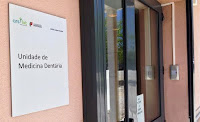
The latest available data show that there are some dentists in some health centers, but also show that the number of consultations of this specialty has always decreasing. The region of Lisbon and Tagus Valley, the Regional Health Administration says in writing that the Oral Health Program in force in this area only includes dental checks. Official data show, however, that there is a dentistry unit that receives users of various health centers in the capital. They work here 7 dentists and 1 stomatologist. We were not allowed to report.
The unit is part of the Shared Services Centers Health Cluster Center Lisbon. It is open from 8 am to 8 pm. The waiting room is a quiet, comfortable place. It is noticed that many are repeat users. All come indicated by your family doctor and here are followed by your dentist. There are children, elderly, chronically ill but who simply can not afford a private dentist. Staff in this health unit were not allowed to testify.
Who they are and how they work - Jose Frias Bulhosa chose not to have private practice. Works in Health Center of Aveiro, and not only. In my health centers grouping'm the only dentist to 369,000 inhabitants. I was put in Vagos 3 years ago, the equipment was not working. Not to be stopped went for consultations Aveiro. They will when the equipment are free when hygienists are not using. Between here and there, there are many revealing cases of missing that dentists do. There are still months identified a woman with a tooth in good sky. The family doctor had never noticed. You would have a 35, 40, did not know what it was. I am also me to remember a 4 year old with 20 teeth and needed intervention 18.
The clients are referred by your doctor or family nurse. Otherwise it would be humanly impossible. The exception are the cases where there is suspicion of malignancy, I always see, anytime. Now with the dentist-check for these situations I can already send these people to another location. Jose Frias Bulhosa also serves children in the region who have exhausted the dental checks to which they were entitled and who attend private schools, which do not receive these checks.
The most difficult cases, said Jose Frias Bulhosa, are the adults with pathology, transplanted with immune problems. These people rarely appear with a cavity, usually they need to deal with 20 or 30 teeth. Most dentists working in health centers know their place can be removed at any time. We should not find excuses. We have therefore chosen, by dentists do not identify which follow.
Antonio is dentist, working in a health center of the central region, but does not exercise is superior technician overall career. I have worked as a dentist, but it was illegal, I can not, if something happens ... ..
A health center of the great Lisbon Joana talks about the risks of working as well. I am better technique, I've been told that I can not anesthetize without permission from the doctor, the truth is that taking our consultation, there is nothing in this area. We are 3, but since we were only two dentists to 400,000 inhabitants and our reference Hospital Amadora-Sintra, has the specialty of dentistry. This query is for risk patients: diabetes, cardiac surgery, transplant, cancer patients. Still, family physicians also in send abscesses. For many people, these dentists are the first and last resort.
Joana does not need to pull the memory to give a few examples: Appeared me a girl of 13 years with a fistula, under the chin, to drain pus for over 6 months. It was a giant external abscess. It is also common to see pregnant women who doctors hesitate to give dental checks for fear of treatment during pregnancy. Then there are those people who enter the vicious circle: do not get jobs because they had the bad teeth, enter the query to take 5 or 6 roots at once, but we can not give prosthetics and they also do not can afford. Also I get to have patients who drop out of consultation by no longer having exemption from prescription charges.
The dentist's career does not exist in the National Health Service, it is therefore not expected to exist in the health centers, but the official price list is posted there. A health center is charged as specialty hospital consultation, costs 7.75 euros, and extraction of a tooth, for example, costs an additional 3.5 euros.Cheques dental yes, dentists do not - Officially, all oral health care within the primary health care is provided by more than 3000 private dentists who have joined the National Oral Health Program. The model is the check-dentist, a voucher for consultation and treatment that is available to children of low-income elderly, patients with HIV-AIDS, pregnant and who has signs or suspicion of malignant lesions in the oral cavity. Rui Calado, director of the National Mental Health Programme explains which are likely to be included new beneficiaries of the dentist-check, but only when there is sustainable funding guarantee. As for the inclusion of dentists in the National Health Service, the costs are considered unaffordable.
Dora Pires
   

Friday, 14 October 2016

660. Oral Cancer: utilization of diagnostic checks is reduced

According to data revealed by the Dental Association (OMD) in the European Day eve of Oral Health, the 4,341 checks issued between March 2014 and June 30 this year were used less than one-third, or 1,315 checks for cancer diagnosis oral. In its initial phase there were some problems with the computer system that makes the issue of checks, said the agency Lusa Pedro Trancoso, the direction of the Dental Association, assuming that the number of checks actually used by users go starting to increase.
The goal of Early Intervention Project Oral Cancer would reach about five thousand annual biopsies and, therefore, it is necessary to increase the checks issued by family doctors, and especially that patients use the network adhering dental checks that they are passed. Despite a reduced rate of effective use of checks for diagnosis of mouth cancer, Pedro Trancoso stresses that the checks execution rate for biopsy is very high, around 90%, which means that suspected cases are being properly directed and monitored.
Of the total diagnostic checks used almost half advanced to biopsy. The 585 carried out under this program allowed to detect 24 cancers and 17 lesions with malignant transformation potential. Pedro Trancoso recalls that 24 cases of detected cancer refer only to early intervention project, with in Portugal many more cases several diagnosed belatedly, which contributes to the mortality rate is less than 50% five years. If the diagnosis is made of early, survival rates can exceed 80%, says the head of the Dental Association.
Arguing that it is essential to increase the use of checks issued by family doctors, the Order believes it is necessary to know the warning signs of oral cancer: wounds that do not heal within two weeks, unexplained volume increases, loss of sensitivity or mobility language.
  

Thursday, 15 September 2016

658. Dental social clinic opens in Setúbal

657. The association "Mundo a Sorrir" already took care of the oral health of 33 thousand Portuguese

Between awareness projects, screening measures or treatments, the non-governmental organization Mundo a Sorrir (World Smile) - Doctors Association Dentists Portuguese Solidarity reached more than 163,000 people over its nine years of activity - with operations in Portugal and several Portuguese-speaking African countries such as Cape Verde, Guinea-Bissau and Sao Tome. in Portugal, the president of the NGO said that were made almost 12,000 screenings and more than 21,000 treatments, especially vulnerable populations. Michael Peacock believes that in future, the work will increasingly focus on the health prevention in a very deprived area in the country.
In the month that the World Smile complete nine years of activity, Miguel Pavão account that the project, which was born out of a personal volunteer experience that the dentist had in Cape Verde with colleague Mariana Dolores, ended up walking to many countries and which continues to struggle for ensuring the universal right to access to oral health care, working with the high-risk groups such as the elderly, children, pregnant women or people with few financial resources. 12 initial volunteers, went to more than 600, including physicians, dentists, hygienists and nutritionists. There are still little care in terms of oral health in the country and little focus on prevention, even in nutritional terms. We have a very system focused not on the right to health but for the right to treat the disease. I think this is the great turning point that we do not treat the disease itself but look at them in an interconnected way, describes the dentist, which highlights the work done in this regard by the Programme for Inclusion and Healthy Life of the World Smile . The project, which has European funding has come through training and screenings to 54,000 children and young people and should end the year with 70,000.
Since they started working in 2005, only Portugal already have 2332 health promotion lectures and hygiene and it is precisely in non-formal education and the introduction of concepts in a playful way that the specialist believes more. Miguel Pavão, covering the country in terms of oral health has improved, especially with vouchers dentist called, attributed to some groups defined as priority by the National Oral Health Promotion Plan. The problem, he says, is that the bet has just been on the side of prevention. Only 3% of healthcare budgets in the European Union that are dedicated to the promotion and health prevention, said, exemplifying that treat oral cancer, including surgery, chemotherapy and radiation therapy, can cost 100 000 euros, a value that says that would give do training in this area throughout the country. The NGO has no direct links to the check-dentist, but the dentist says they have had a concertation logic and adapted programs to help that policies like this are best executed and without the work of volunteers overlap to what exists in State. Not everyone knows that you are entitled to checks or how to use and screenings and activities help in this direction, illustrates.
The inequities in access to oral health care continues to be a problem in Portugal, with most of the treatments to be held outside the National Health Service. In fact, in June the Regulatory Authority of Health (ERS) published a study where ruling on dental checks available to some risk groups under the National Oral Health Promotion Plan. In the document, the ERS believes that the program should be extended to children and youth in private schools and also to non-elderly beneficiaries of the solidarity supplement and even to pregnant women who are not followed in the National Health Service.
For now, only children aged 7, 10 and youth 13 and 16 years who attend public schools are entitled to receive these checks in the amount of 35 euros each. Until the age of six checks should only be given to serious cases. The study also highlights other limits of this plan, such as those relating to the setting of a maximum number of dental checks to be allocated to each group. The ERS adds, moreover, that most dentists think that the number of checks and the value of these are not compatible with the needs of the beneficiaries.
Romana Borja-Santos
   

Saturday, 3 September 2016

656. New research project wants to make dental care in Europe

A new research project, funded by about 6 million euros by the European Union wants to revolutionize the practice of dentistry and oral health, shifting the focus of dental treatments for preventive practices.
According to EU data, dental treatments have an estimated cost of around 79 billion euros annually in the European Union.
The project will last four years and will be led by the University of Leeds, the Academic Centre of Dentistry Amsterdam and the University of Heidelberg. The goal is, by European health data, work together with dental professionals and insurance companies in order to identify strategies for the prevention of oral health problems in each of the European countries.
The World Health Organization has said that oral diseases are the most common chronic diseases to humans. We want to change that, says Helen Whelton, Rector of the University of Leeds and responsible for the project. The hope is that, by evaluating the performance of dental professionals, we can implement change and encourage a shift to preventive practices in dental care.
The initiative will evaluate health data from a total of eight countries such as the UK, Denmark, Germany, Hungary, Ireland and the Netherlands.
Ana Rita Costa
  

Tuesday, 16 August 2016

655. Health space serves population Mire de Tibães

In order to provide citizens with access to basic and primary health care, with the provision of various services, the project Health Area grew implemented by Mire Parish Council Tibães.The intention of the project does not involve the replacement of the health center, but to offer an additional option of proximity to the population, focusing on high competence of professionals who provide services there.We assess the needs in the middle where people are located. Sometimes the simple fact that people enter the health center hinders the expression, because not always verbalize the needs they feel and sometimes the values ​​are changed one bit. We know that some people often change, for example, the value of blood pressure. According to the health profile of the Northern region had to examine factors associated with excess weight, smoking, alcohol consumption, diet and medication regimen, explained Adriana Barbosa, licensed nursing and mentor of the project.In parallel with the work developed with the adult population, the Health Zone also works with children. In the Kindergarten has gone very well. Children take well the program at this time is devoted to oral health. We are teaching how to be cleaning the teeth, what the benefits of proper washing, which foods are good for teeth, which are bad, etc. It is a very playful and interactive component so we can convey the message, said Adriana Barbosa.José Magalhães, president of Mire Parish Council Tibães, explains that the project aims to continuous improvement and the identification of valences that can be integrated into the initiative to contact the population.Initially, the professionals involved in the health space carry out an evaluation of the patients who will dictate its continuity or not this service, depending on the loyalty of the population.

654. Braga will offer 6,000 dental consultations per year

The Braga council approved Monday, Braga project Smiling, which aims to ensure the free access of the poorest people to oral health care. The program will provide 6000 consultations, in partnership with the NGO World Smile, an investment of 200,000 euros. To benefit from this service, users will have to be marked by the Social Action services of the local authority, the Parish Councils and IPSS of the county, as explained by the Braga Municipal Council (CMB) in a statement. Additionally, this action will also cover all children and the elderly in the county, with several actions in the 1st cycle schools, nursing homes and day centers in the county, promoting oral hygiene and the training of technicians and professionals work in these spaces Braga to Smiling will be developed in partnership with the NGO world smile that in nine years of existence, has conducted about 20 projects related to oral health, they were beneficidas more than 170,000 people worldwide . With this partnership, it is expected that more than 5000 children and 500 elderly county benefiting from this action will perform to a total of more than 6,000 consultations per year. This is a pioneer project in which the city of Braga takes health support policies among older; education of the younger population and also a social inclusion policy, with the possibility of greater integration into social and professional level who have no access to oral health care, says the president of CMB, Ricardo Rio, quoted by the same statement.

Sunday, 24 July 2016

653. Looking for volunteers to treat children's mouths

The Good Dentist project needs volunteer doctors in the municipality of Cascais. Thank needy children. The mission is simple: to improve the oral health of underprivileged children and young people aged between 11 and 17 years, providing them with free treatment until they are 18 years. Work that the Panel of the Well has played in Portugal since 2010. And it wants to continue to pursue. But it needs volunteers, dentists that offer their time, something goes missing. Cascais is even a county where there is a risk of the mission not be brought to fruition.
Half an hour a week or 15 to 15 days is the time that dentists have to offer in offices, explains the Destak Alaize Maria da Silva, dentist, volunteer and coordinator of the Good Dentist Project in Cascais, where there are already 30 volunteers. But more are needed to join the 550 that exist all over the country. The benefits for children are many. It is not only safeguarded the oral health as improves their self-esteem. The children come to us at the office with his head down, shoulders hunched because they are ashamed. To be dealt with, take the hair out of her eyes. Will now be integrated and have other income, he adds.
And again calls: what we need is volunteer dentists. More information at:

Saturday, 2 July 2016

652. Study released twice ...

The World Day of oral health in Portugal was celebrated this year in our country with a study in which they had already been presented the findings at the celebration of the World Day of oral health in 2013. Only someone distracted was thinking it had been presented a study again, for this III National Prevalence Study of oral Diseases it has been done for several years and does not portray the oral health of children and young people currently in Portugal.
It was good that the Ministry of Health and the Dental Association had specified the specific date on which the study was conducted, since the same study served to celebrate the World Day of oral health in Portugal in several years.
With nothing new in oral health in Portugal, forwards the reader to the conclusions of the study published in this blog in April 2015.